
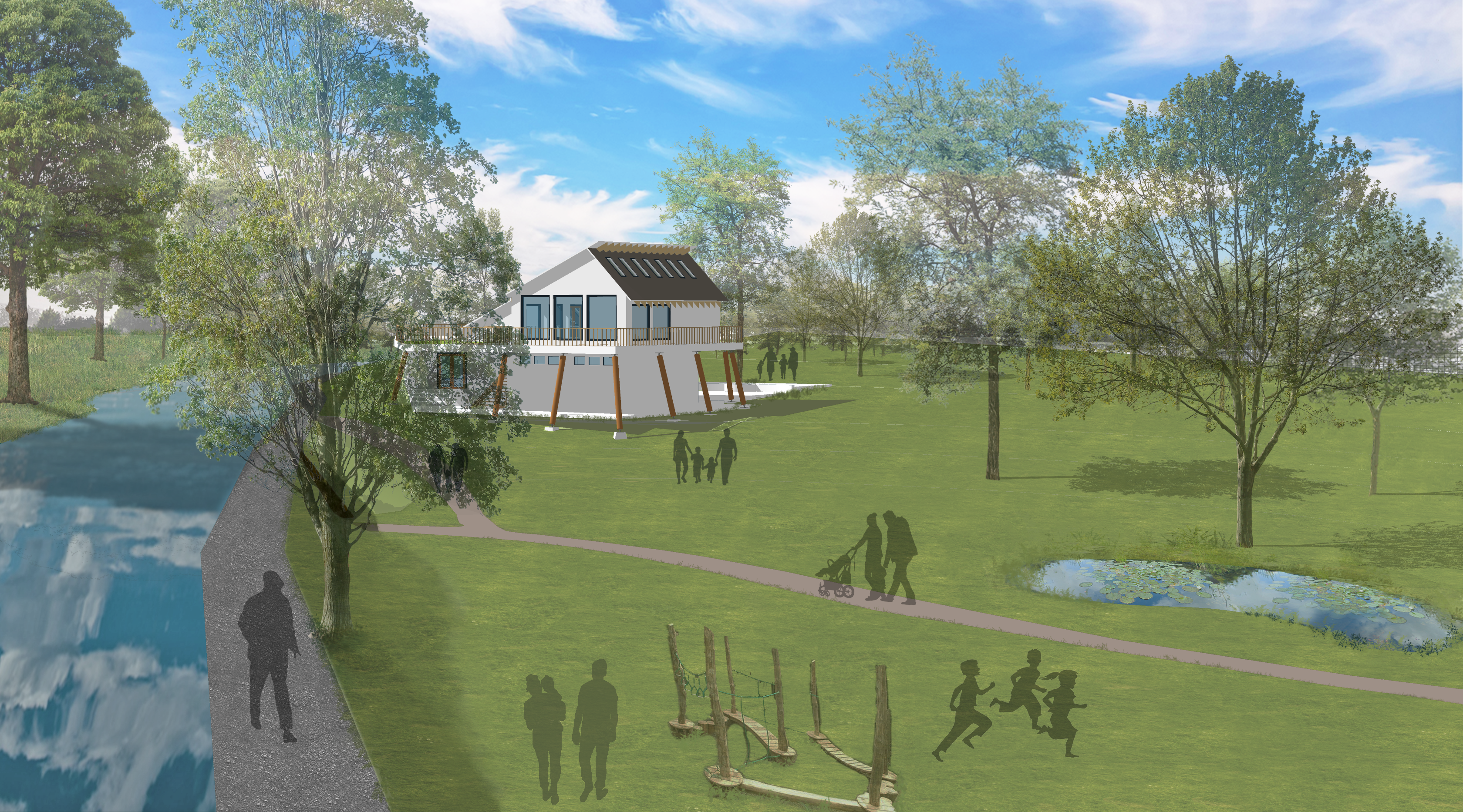
Context – A feeling of Nature
The Union Canal is a unique feature in Edinburgh’s landscape. Although engineered with the greatest precision, it is simultaneously highly organic and fosters a rich biodiversity of plants and animals. Some areas of the canal are so secluded that they successfully transport you out of the city and into a pocket of nature. This is an extremely rare feeling to achieve in a city, and it is the feeling that this project is in pursuit of.
A connection with nature goes hand-in-hand with sustainability. A persons value for nature stems from their connection with nature, and is undoubtedly a driving force for people to act more sustainably. In cities, places where this connection can happen are, broadly speaking, limited to parks. But even in parks it can be hard to eliminate factors such as noise pollution (a key reason why the canal is so effective at immersing in nature).
The stretch from Kingsknowe to the city bypass, however, has a very different characteristic. Towering council house blocks and stretches where only a pavement separates the canal from a road, strip the canal of its feeling of natural seclusion. The effects of this are evident. As it becomes a part of the city, it is treated as such. Litter collects in the bends of the canal and plants along the borders are tamed and domesticated.
The established infrastructure make it almost impossible to re-create this characteristic of the canal, something which could be of huge value to local residents, and to the general quality of the canal.
Three hundred meters east of Kingsknowe railway station sits the Millennium Acres Community Woodland. A young woodland, planted in 2000, covering nearly a hectare of land. This is one of the largest ‘unused’ spaces along the canal, with immensely rich natural capital. This project aims to leverage the site’s natural capital, and create an area dedicated to connecting with, learning about, and being immersed in, nature.

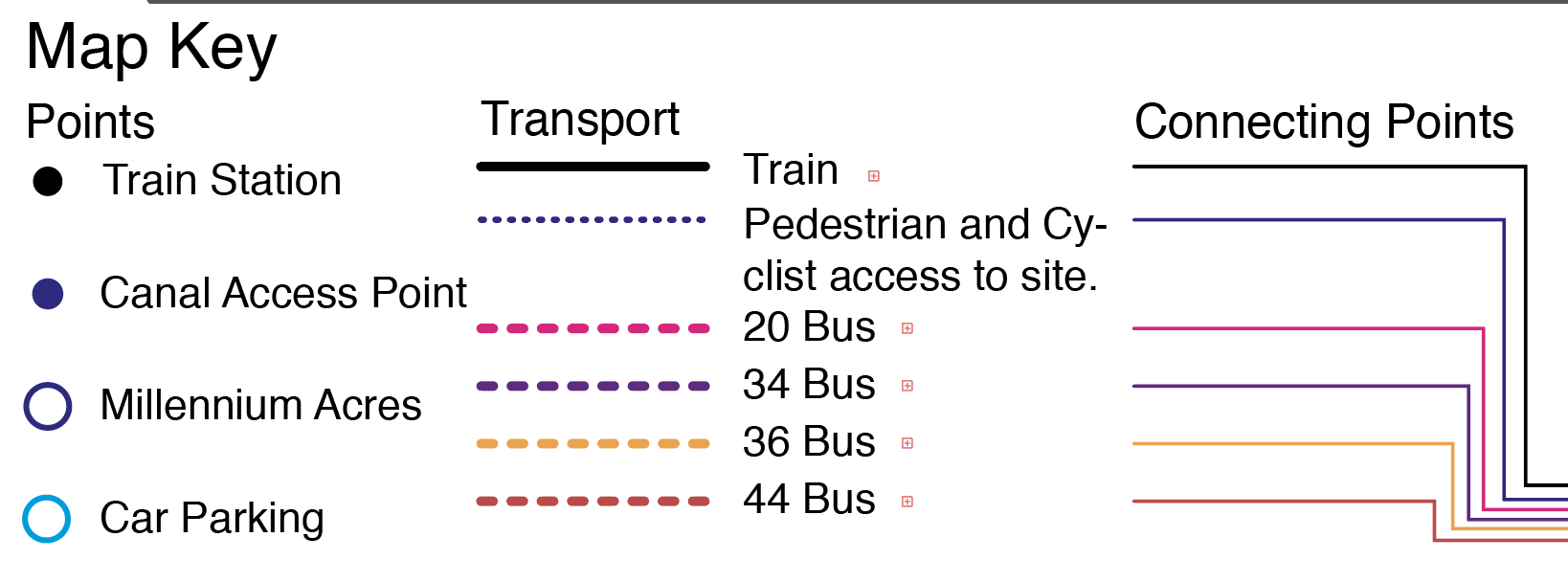
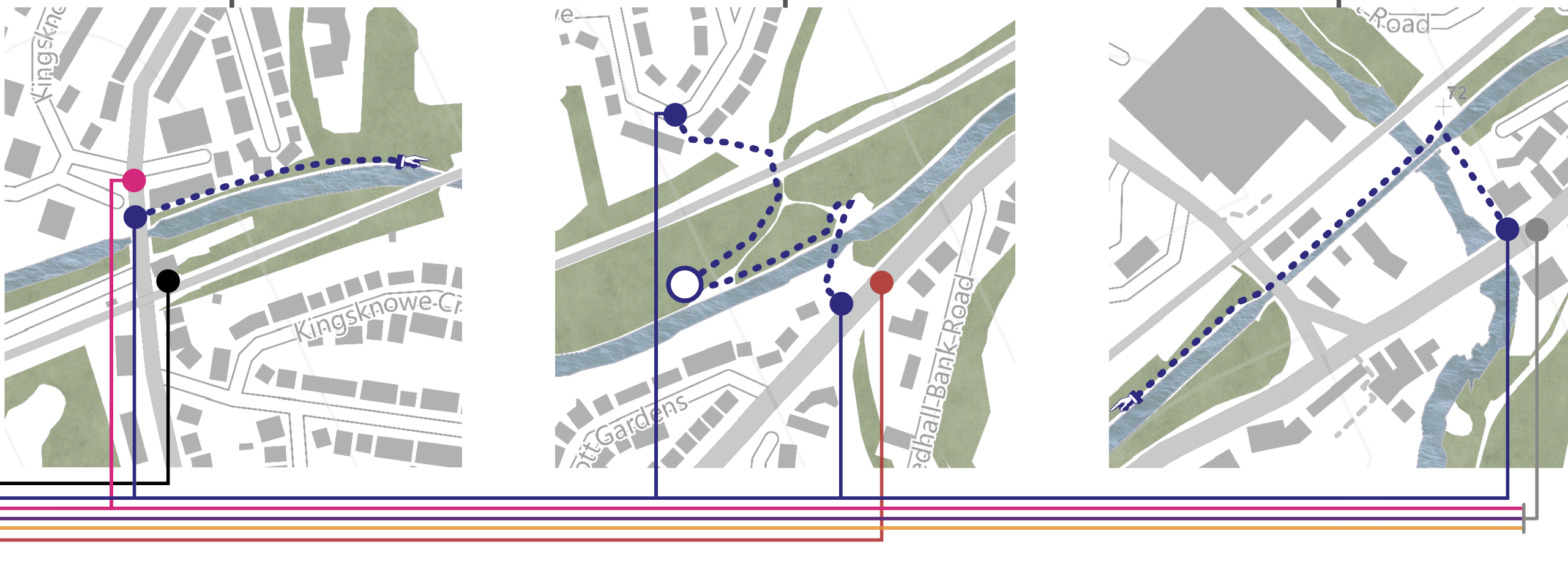
The Site has good pedestrian and cyclist accessibility, but is non existent for larger vehicles apart from canal boats. To the West the canal connects to Kingsknowe road, where Kingsknowe railway station is located, serviced by the train between Edin- burgh and Glasgow. To the east, the Canal tow-path leads to the Slateford Viaducts where a staircase connects the Canal and street level. Here is the most convenient access for visitors coming by car, as they can park in the Sainsbury’s parking lot nearby. Aside from the canal tow-path, there are two other paths connecting the site directly to the adjacent neighbourhoods. To the South, a bridge connects the site to Lanark Road, and to the North, a tunnel under the railway leads to neighbourhoods of Long- stone and Redhall.
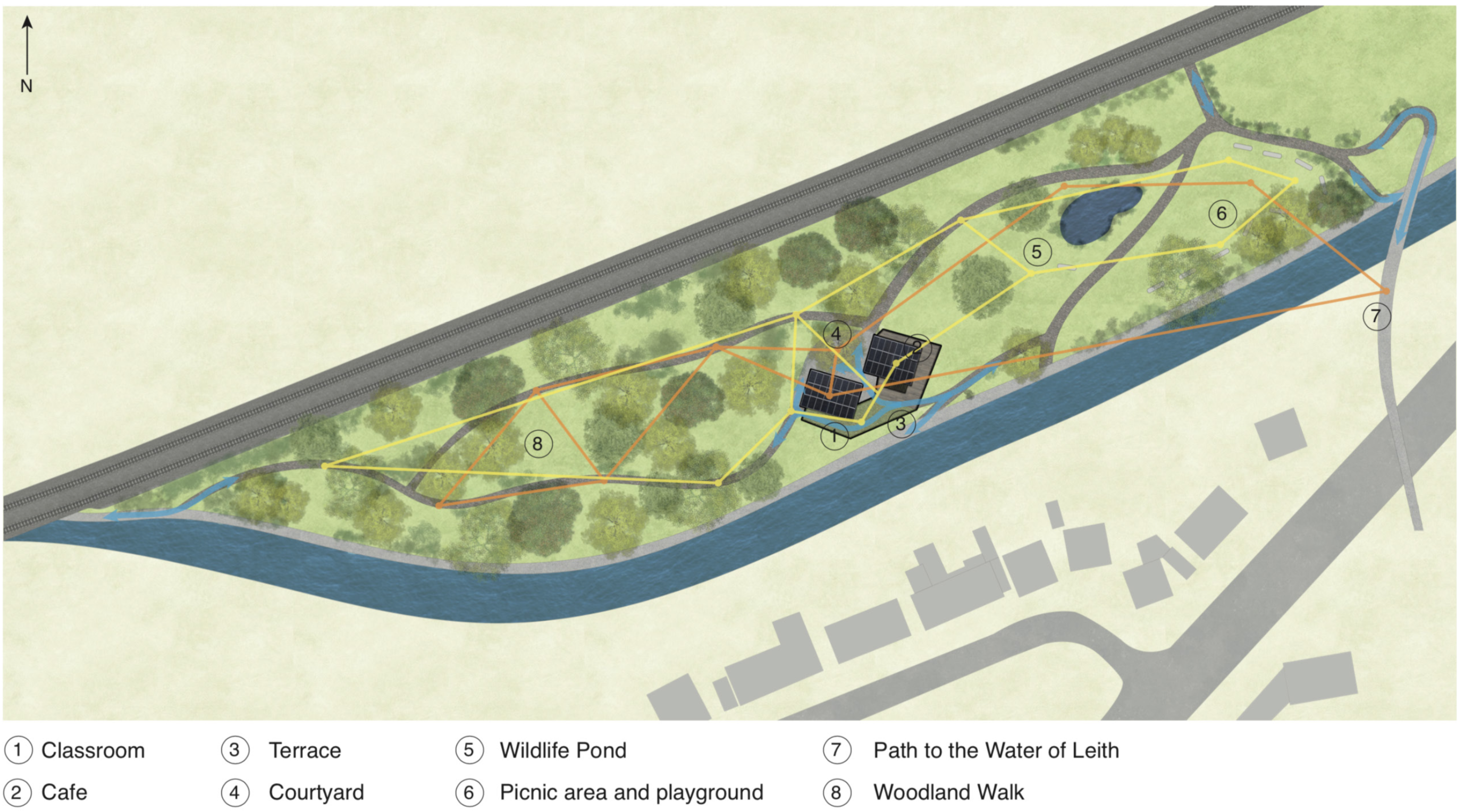
Who is the Millennium Acres Environmental Centre For?
The short answer is everyone. However, it is design with two groups in mind. The first is school groups. Education is a key goal of the centre; both the facilities indoors and out- doors are designed to facilitate this. The second group are families. Res- idents of poorer neighbourhoods such as Calder, Sighthill and Wester Hailes may not have the money or time for spending time in nature in far away locations. This centre gives them the opportunity to do so.
School Groups
The range of activities, both educational and recreational, is
vast at the millennium acres environmental centre. Schools
such as Longstone Primary, Murrayburn Primary, and Canal
View Primary, are all situated very close by providing an excel-
lent opportunity for longer term connections. The orange web
on map above shows the educational connections that span
the various areas on site.
Families
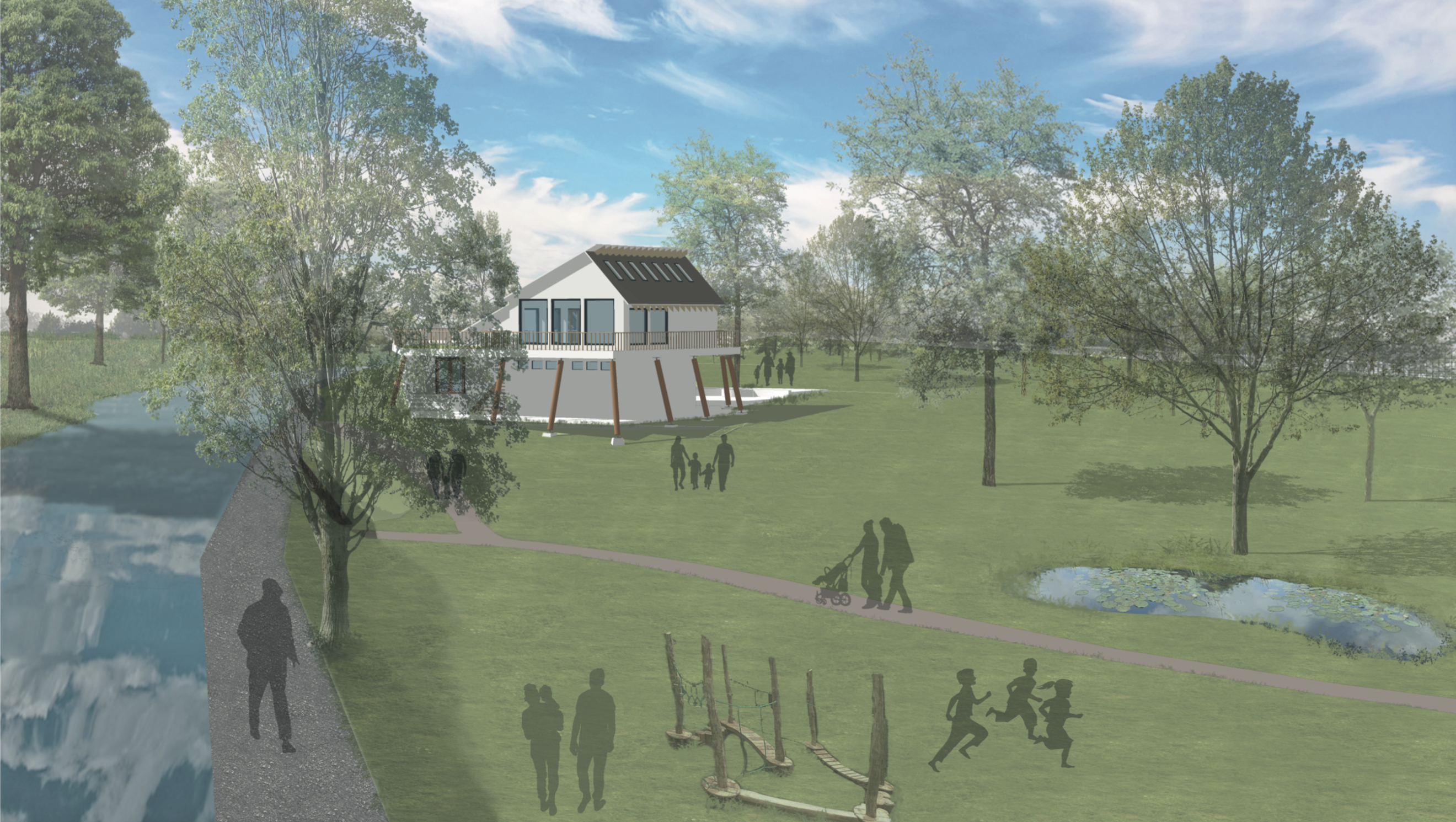
The Centre is an excellent place for families to spend time
together; from woodland walks both through the site and along
the Water of Leith, to having brunch at the cafe. The cafe
terrace is situated ideally so that parents can keep an eye on
their kids playing in the park, while enjoying a drink. The cafe
is also ideal for parents while their children take part in activity
groups on weekends, such as scouts or brownies.
Learning Biomes
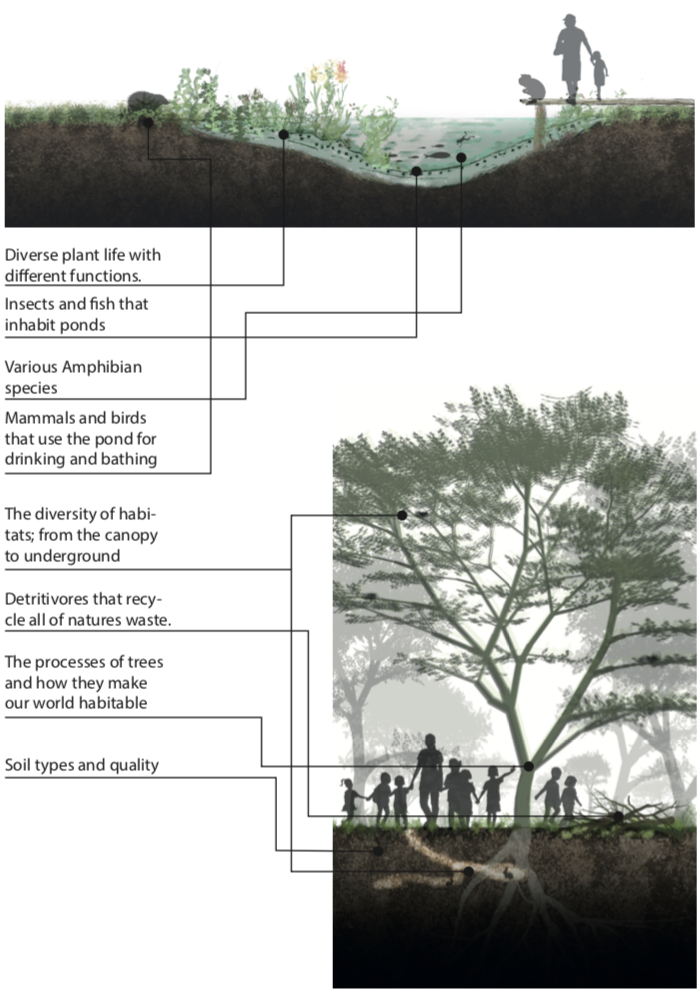
The wildlife pond, woodland and glade are all locations of high biodiversity. As such, one of their main purposes in this project is to be used for education and learning. School groups will come to the centre in order to learn about wildlife and environmental systems, through practical experience. The Learn- ing biomes provide areas where children can see and study creatures and plants. The classroom in the centre provides them with a space for theoretical learning, which can then be put immediately into practice. Below is just a handful of the myriad of things to learn about in nature and at the Millennium Acres Environmental Centre.
Millennium Acres Environmental Centre
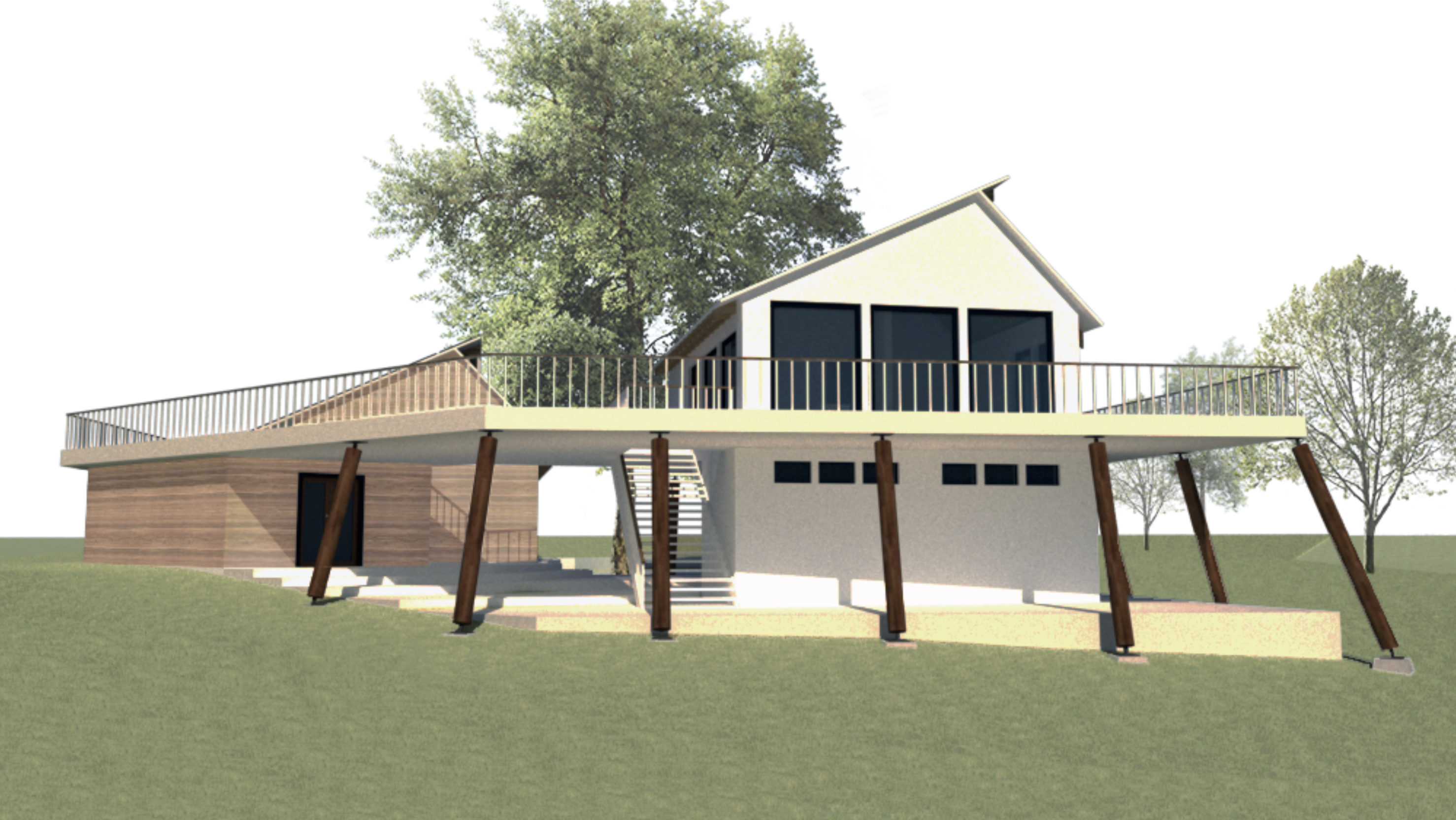
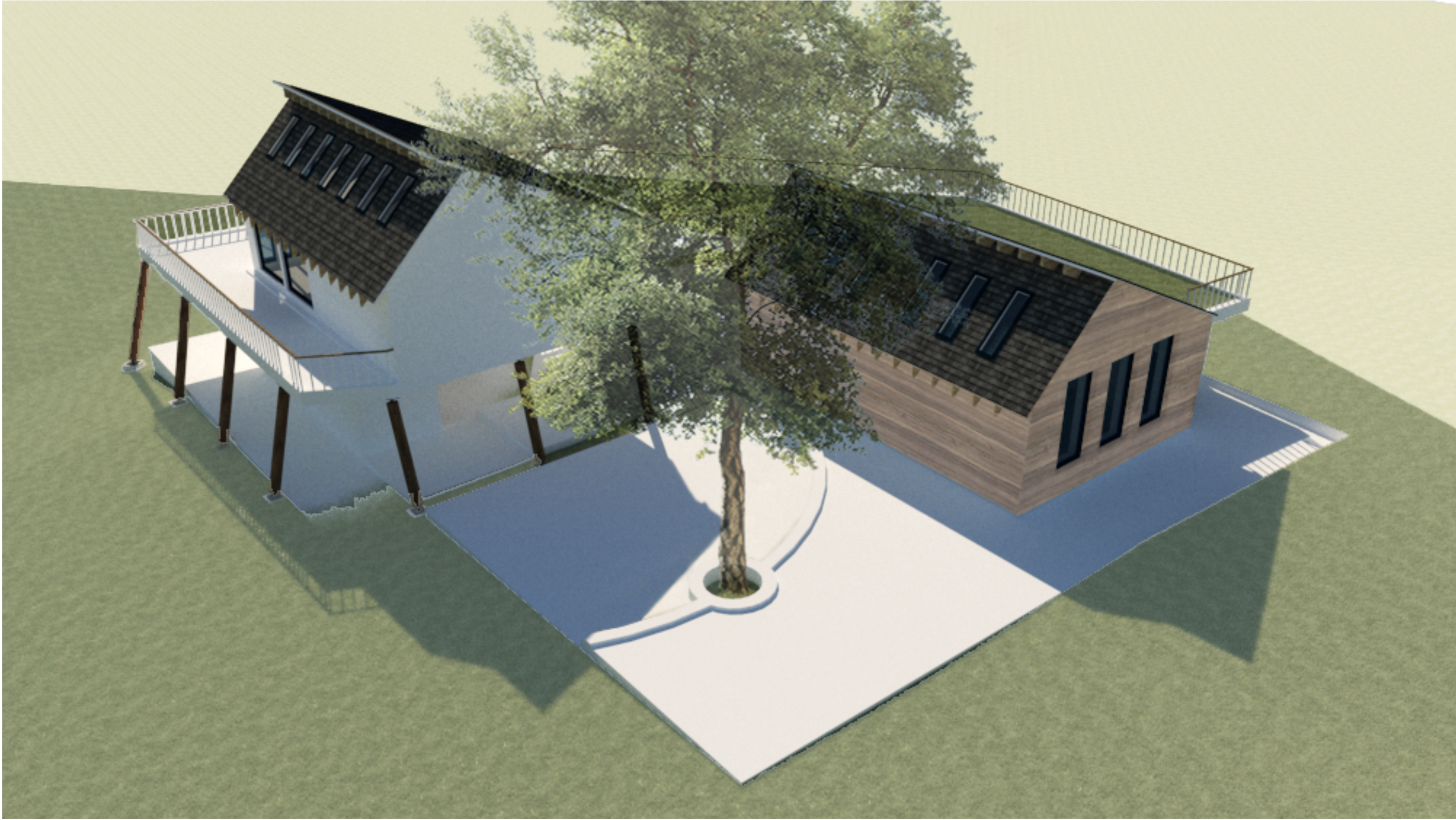
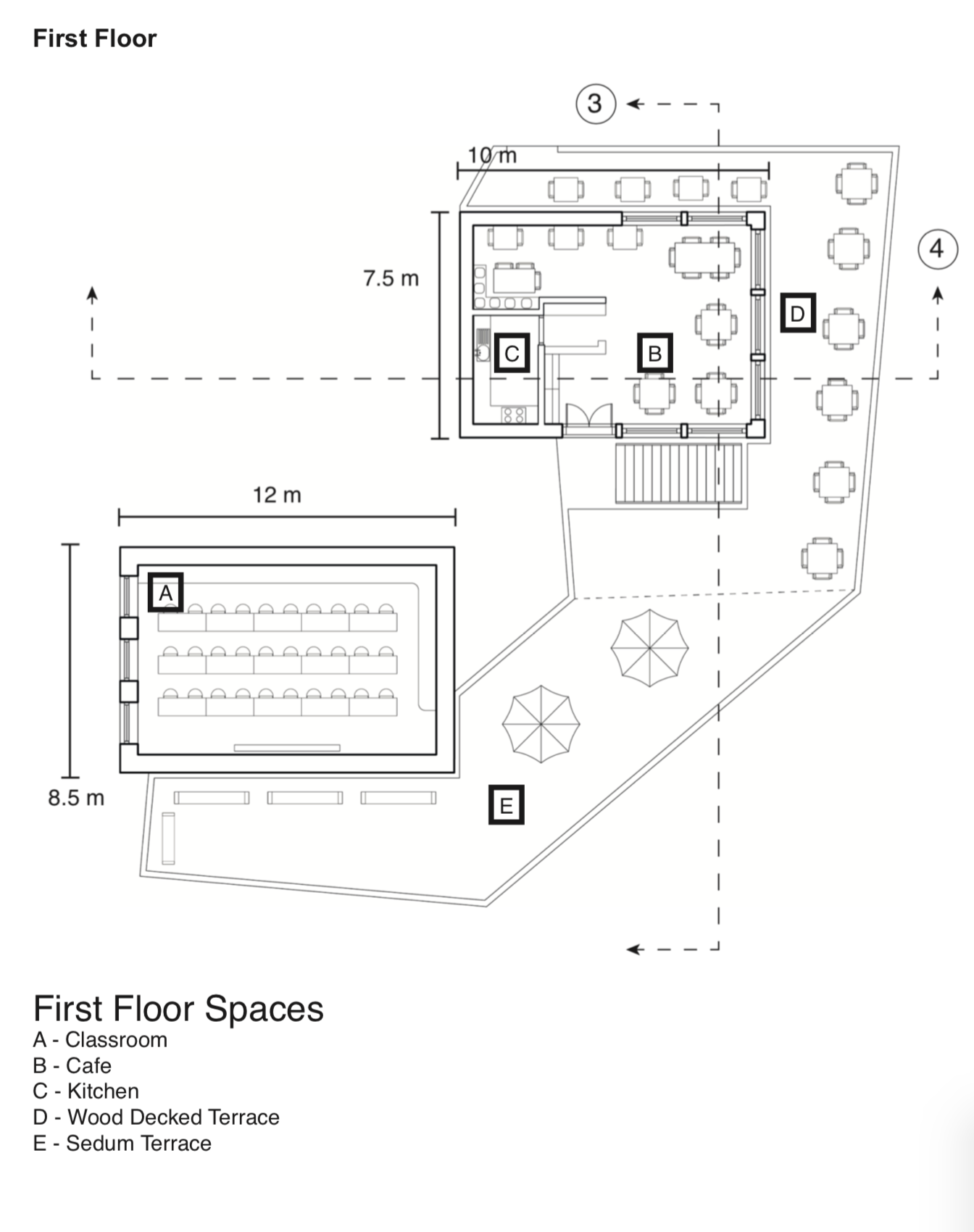
The Learning Centre and Cafe sit at the heart of the project. Two separate buildings that operate independently, but which together, tie the two sides of the project together.
The building is designed to be a ‘stopping point’ along the walk through the woodland, rather than an ‘end destination’. In addition to integrating spatially with the path through nature, it also aims to be a demonstration of how buildings can integrate harmoniously with, and have a minimal impact on, nature in terms of construction and use. All the materials chosen for the construction are low impact, natural materials, which can be sustainably sourced, and recycled at the end of life. The roof design accommodates an extensive solar array which will meet the centre’s energy demands. The ‘wrap-around’ veranda that connects the two buildings is finished in two surfaces; wood decking around the cafe to provide a large seating area, and sedum above the gallery, which again, emphasises the connection with nature and greenery. The buildings are arranged around a courtyard to the north side, whose ‘centre-piece’ is one of the trees that pre-dates the millennium plantation. The fact that the courtyard won’t receive much direct sunlight, means that it will make for a pleasant shaded seating area, and more specifically, an excellent outdoor learning space for school and activity groups.


Working With the Environment
Energy
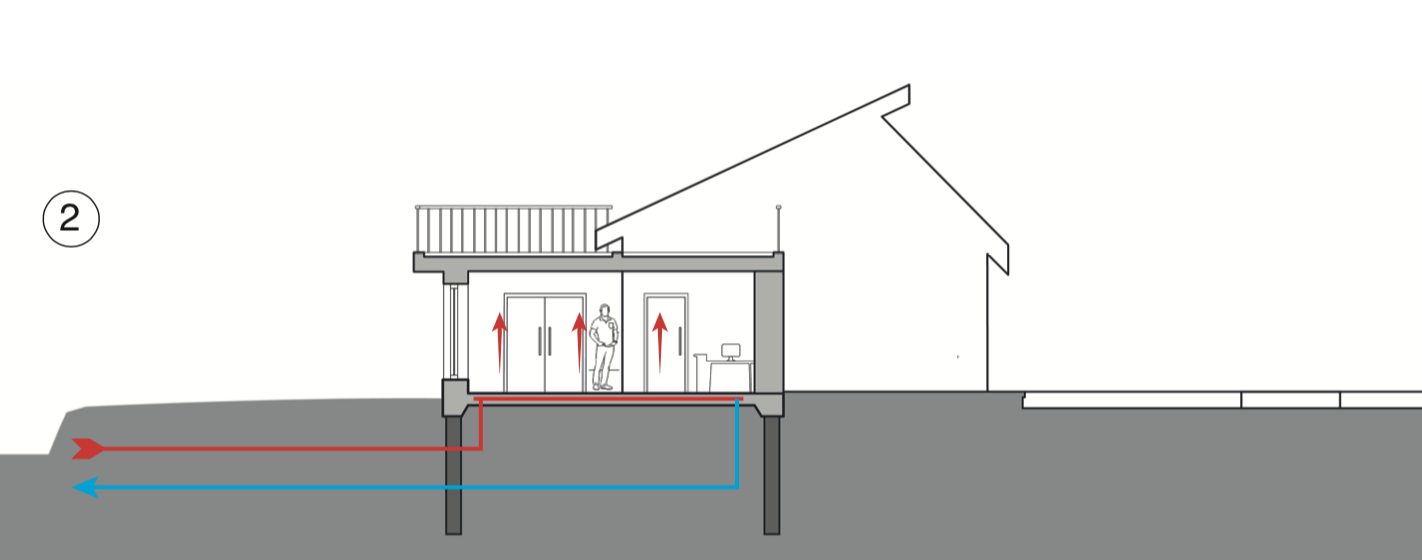
The site’s location makes it difficult to accommodate for the supply chains required by most renewable energy systems (inaccessible for biomass delivery, too sheltered for wind generation, etc.). As such, the most viable option is a water or ground source heat pump (water source given permission to use the Canal to immerse the ground loop). The heat pump will be powered by solar PV. Both the roofs of the Cafe and Classroom have been designed to be asymmetrical, in order to maximise the area of the south facing side. As a result, the maximum PV area possible is 140m2. This results in about 14 MWh of annual electricity production capacity.
Heating
The Gallery and Classroom work together to capture and store solar heat. The large amount of south facing glazing on the Gallery’s southern wall captures heat from the sun. The high thermal mass of the partition between the Gallery and Classroom captures and stores this heat. Eaves above the gallery windows shade the windows from high summer sun, when the heat isn’t needed, but captures low winter sun. The result is a system that stores and distributes heat when it’s needed, and shields and cools when it is not. Of course the passive design isn’t sufficient to keep the whole building warm throughout the year. When additional heat is needed, the radiant floor system provides the necessary warmth to keep the building comfortable. A radiant floor is chosen here because it requires low grade heat (40 – 50 degrees Celsius), which makes it ideal to work in conjunction with a ground/water source heat pump, as they operate at their highest efficiency when heating water to this temperature range.

Lighting
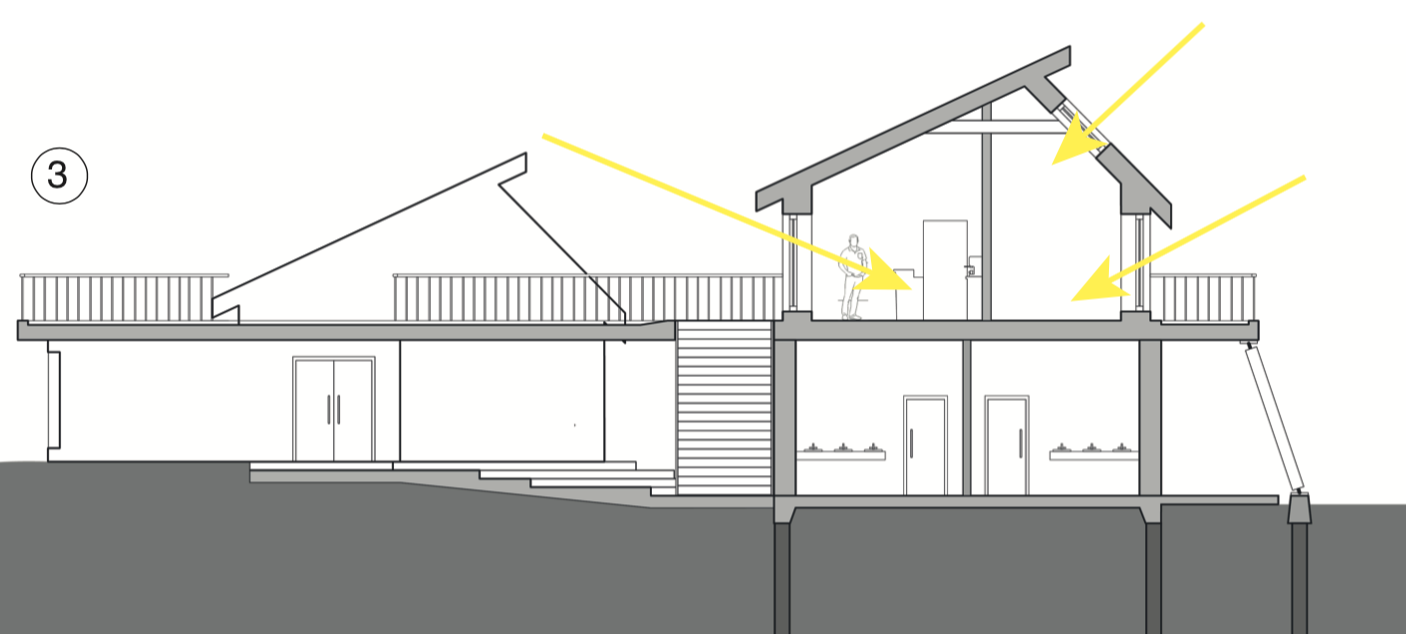
Natural lighting is a key component in creating healthy internal conditions. This is why both the cafe
and Classroom strategically placed glazing to maximise functionality. In the cafe, large windows facing
the East, South and North provide views over the canal and Glade. In addition to this, a series of sky
lights on the north face of the roof provide indirect natural light. In the classroom, three tall windows
placed on the west facade provide natural light while ensuring that glare isn’t a problem during use
hours. Additionally there is also an array of sky lights, similar to those on the cafe roof. Artificial lighting
needs are met by low energy LED lights.

Materials and Construction
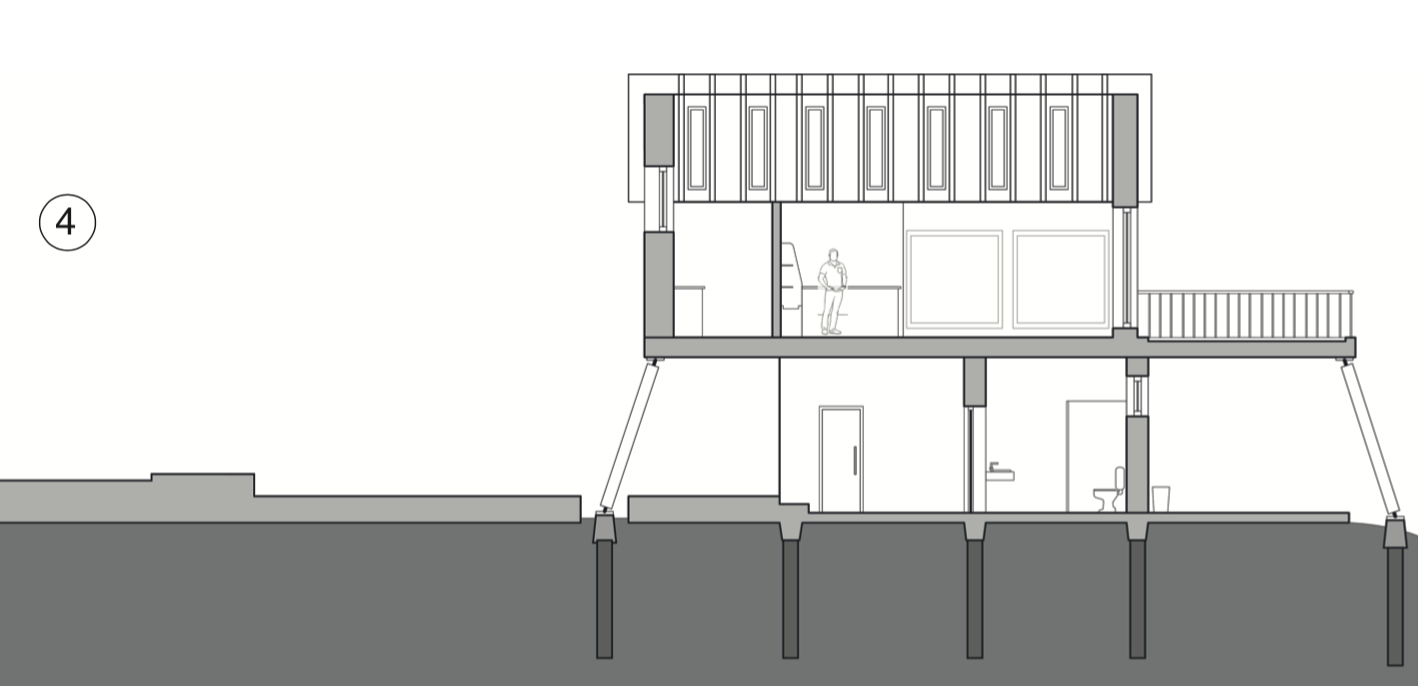
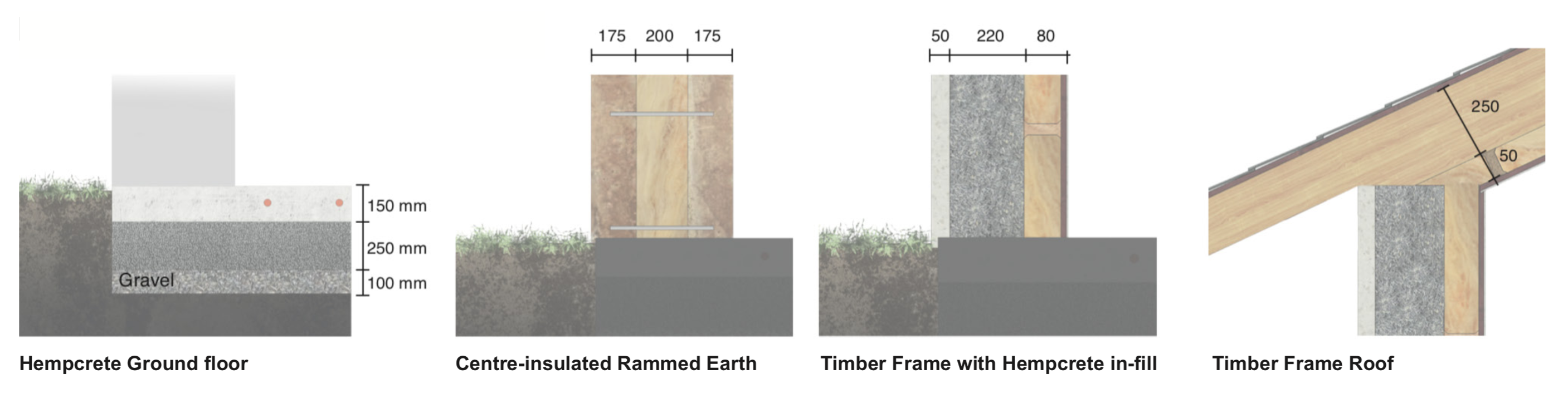
As the energy systems and building are designed to minimise environmental impact, so is the choice of materials and construction. The Learning centre will be made of ‘two leaf rammed earth, with an insulated cavity’. The benefits of this are two fold. First it strikes an ideal balance between thermal mass and insulation, and second it preserves the rammed earth aesthetic on both faces, which would otherwise be lost if insulated on the inside or outside. For the cafe, more conventional timber frame construction is chosen, however, it is in-filled with hempcrete to provide both thermal mass and insulation. Additional insulation is added on the inside to maximise thermal performance, and close the heat bridges caused by the timber studs. Lime is used in place of concrete as it has a much lower carbon footprint. The roof structure is a simple timber frame structure, with a gable end.
 WATER LOGIC: REGENERATING UNION CANAL