
Eftychia Parisopoulou
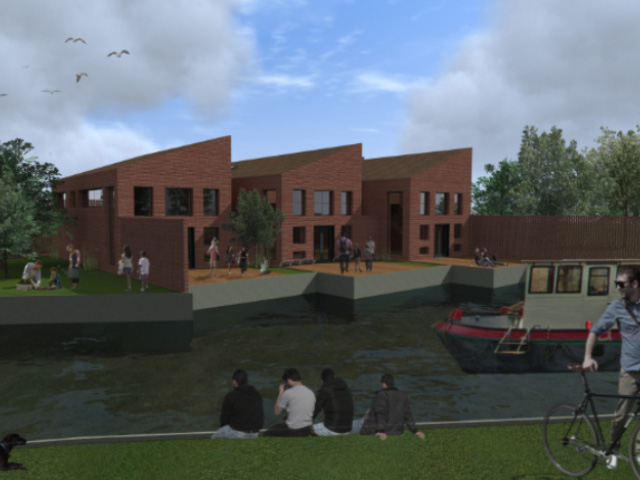
“Educated by Nature” is a proposal of outdoor learning activities designed for the students of four primary schools close to the Union Canal. These schools are: the Canal View primary school, the Sighthill primary school, the Murrayburn primary school and the Longstone primary school.
Urban Layers: Deconstructing the City
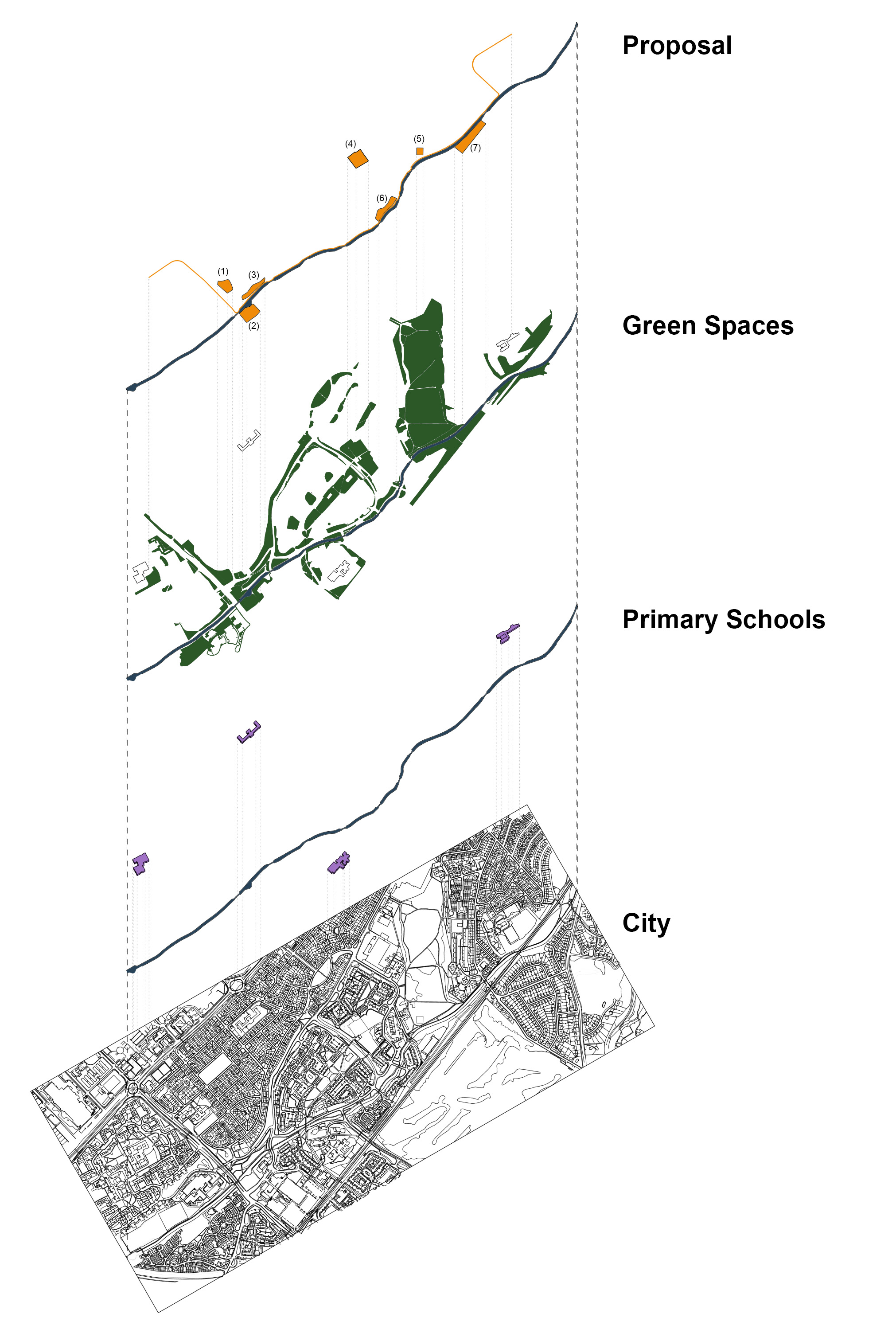
The City
The first stage of mapping and analyzing showed that the area from the intersection with Water of Leith until the bypass of the city is much more problematic and underutilized compared with the rest, closer to the city center. A research on the demographics indicated that this area accommodates an underprivileged population, with a lower educational level and social grade. Moreover, it is marked as a particularly unsafe section of the city, where people tend not to use as a result of their fear.
The Four Primary Schools
Inside this area of Wester Hailes, four primary schools were spotted being very close to the Canal but actually not having any interaction with it and the nature around it. In addition, the four schools do not have any connections between them or any type of cooperation, although they serve a homogeneous population in a very short distance.
The Green Spaces
During the deconstruction of the city layers it was observed that over the neighborhood of Wester Hailes there is a network of green spaces. Many of them provide an adequate size for hosting different activities.
The Proposal: Connecting the Schools
Following the analysis presented the idea of connecting these four schools together and with the Union Canal was born. The aim is to create a corridor of outsoor learning activities where the four schools can share as a common ground to develop their relationship with nature as well as widen their learning process. The linkages between the schools and the Canal are both physical and virtual.
“Spine”: Route – Corridor along the Canal,
connecting the four schools together as well as with the activities
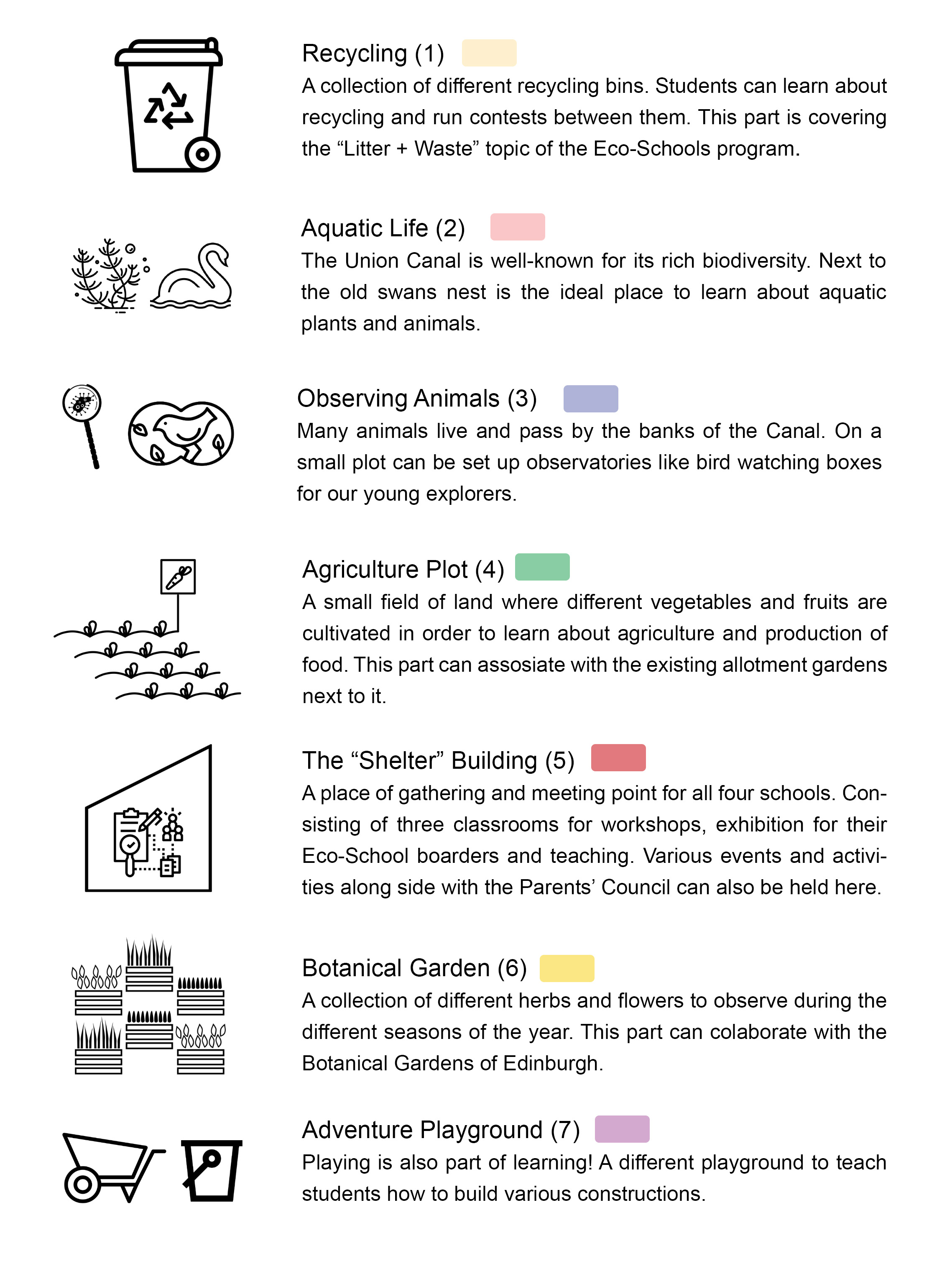
“Ribs”: Activities of outdoor learning working alongside the Eco-Schools Program, in which schools already participate. The space where they are located already exists, but it is more underutilized giving that way the opportunity for development.
Programme Activities
Operational Diagrams
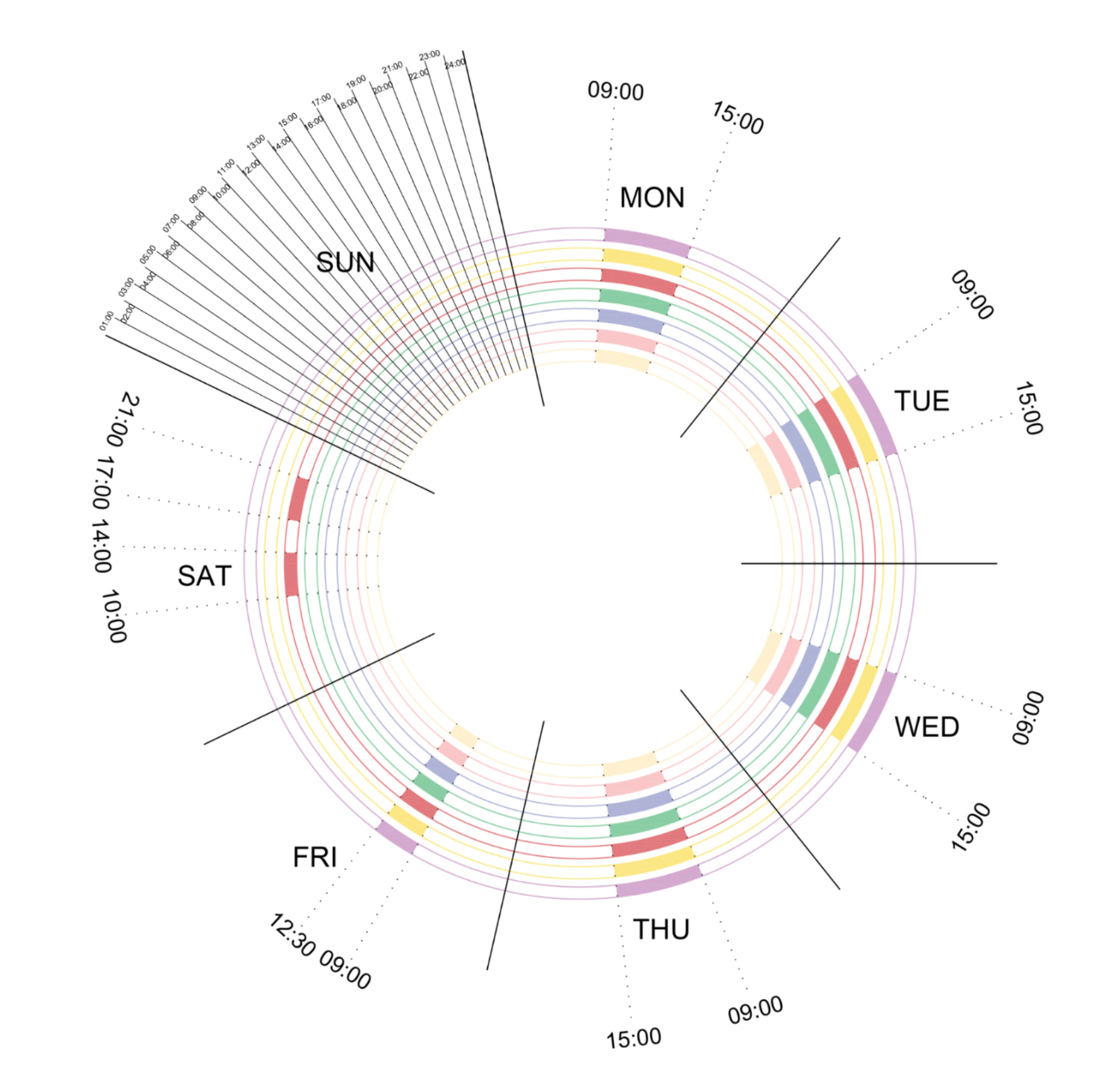
Activities running during the week 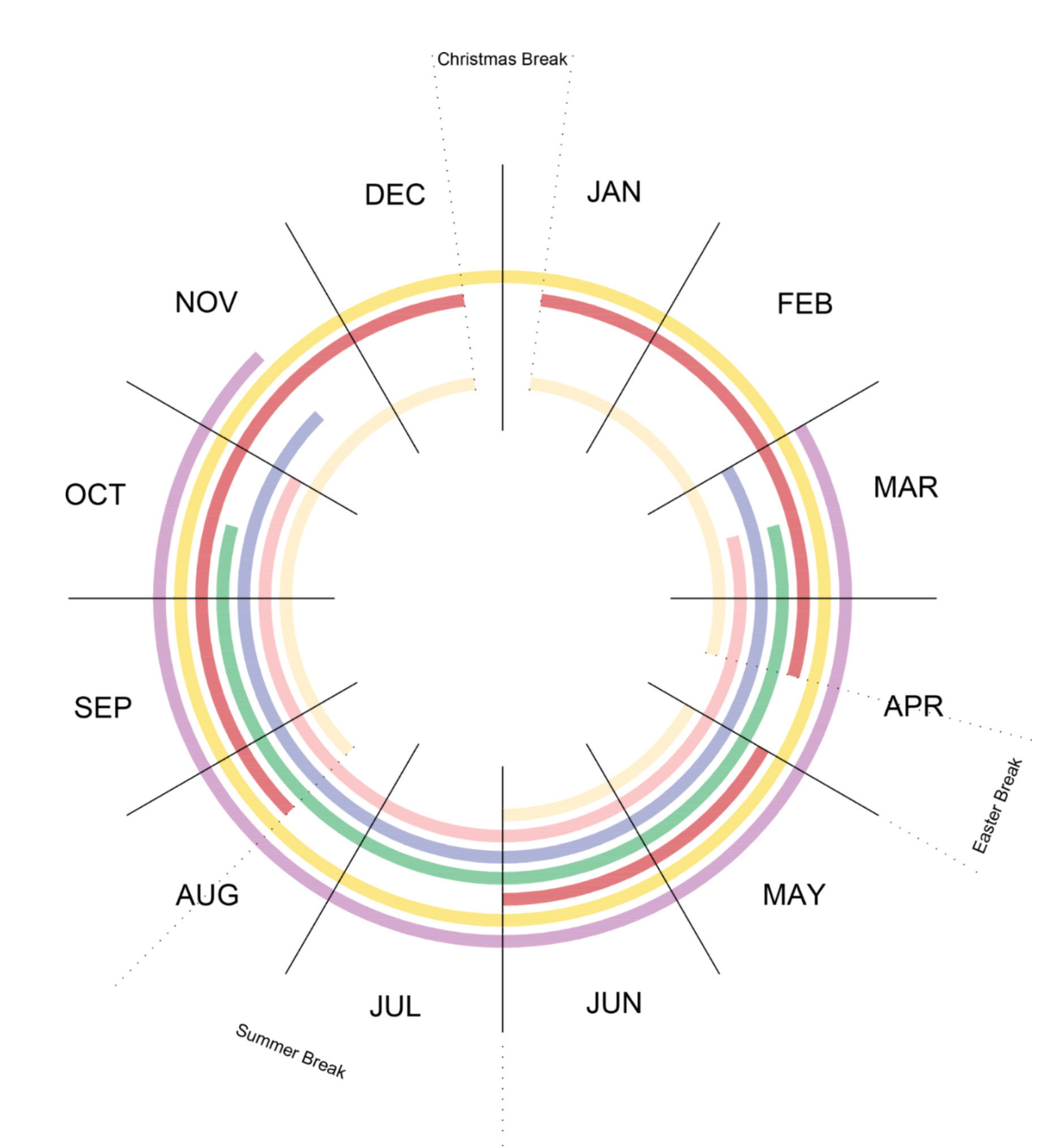
Activities running during the year
A Typical Day Scenario
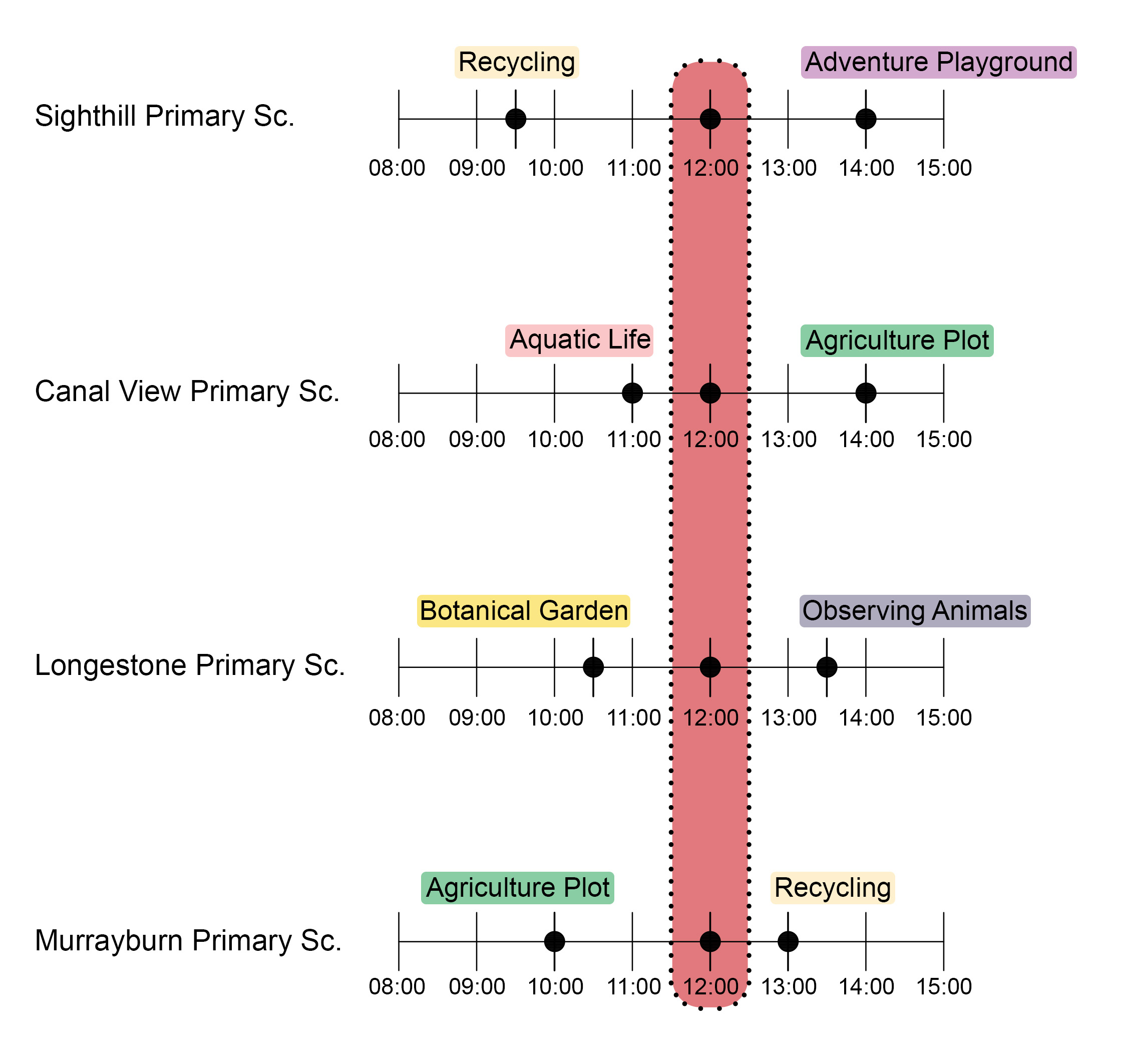
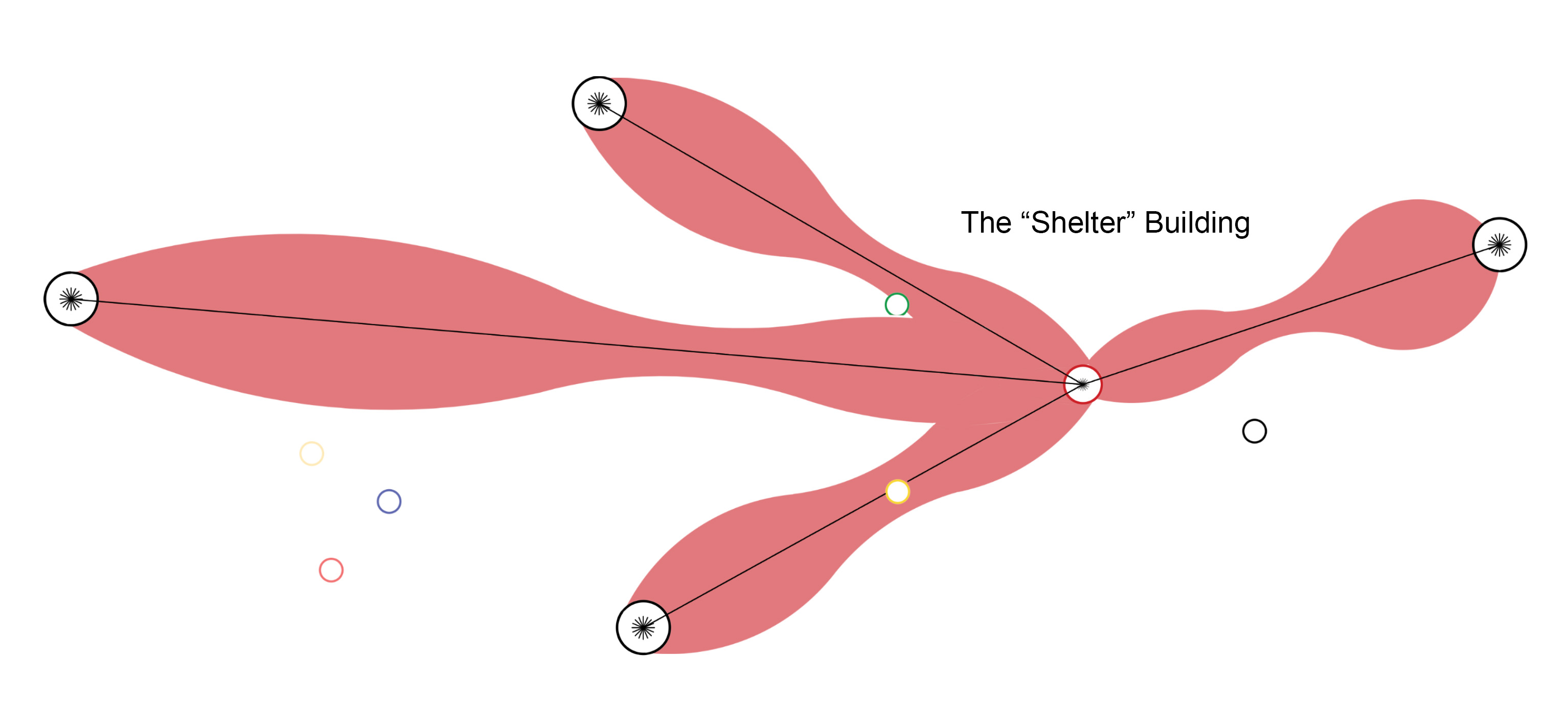
During a typical day the four schools can select outdoor learning activities from the programme toolbox. At 12:00 all the students should meet at the “Shelter” building to present their work and exchange ideas. Then, they are free to continue their activities as they wish.
Network
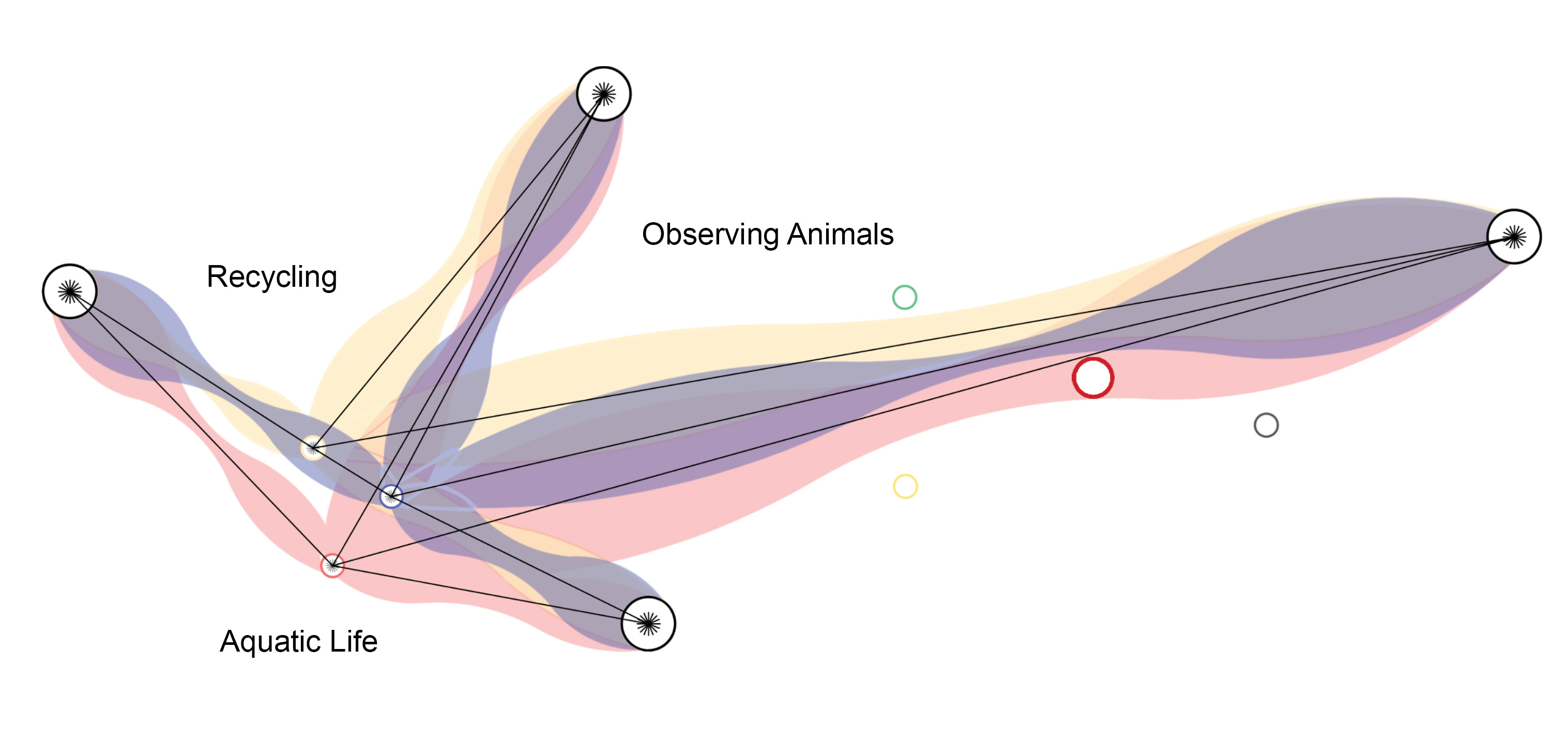
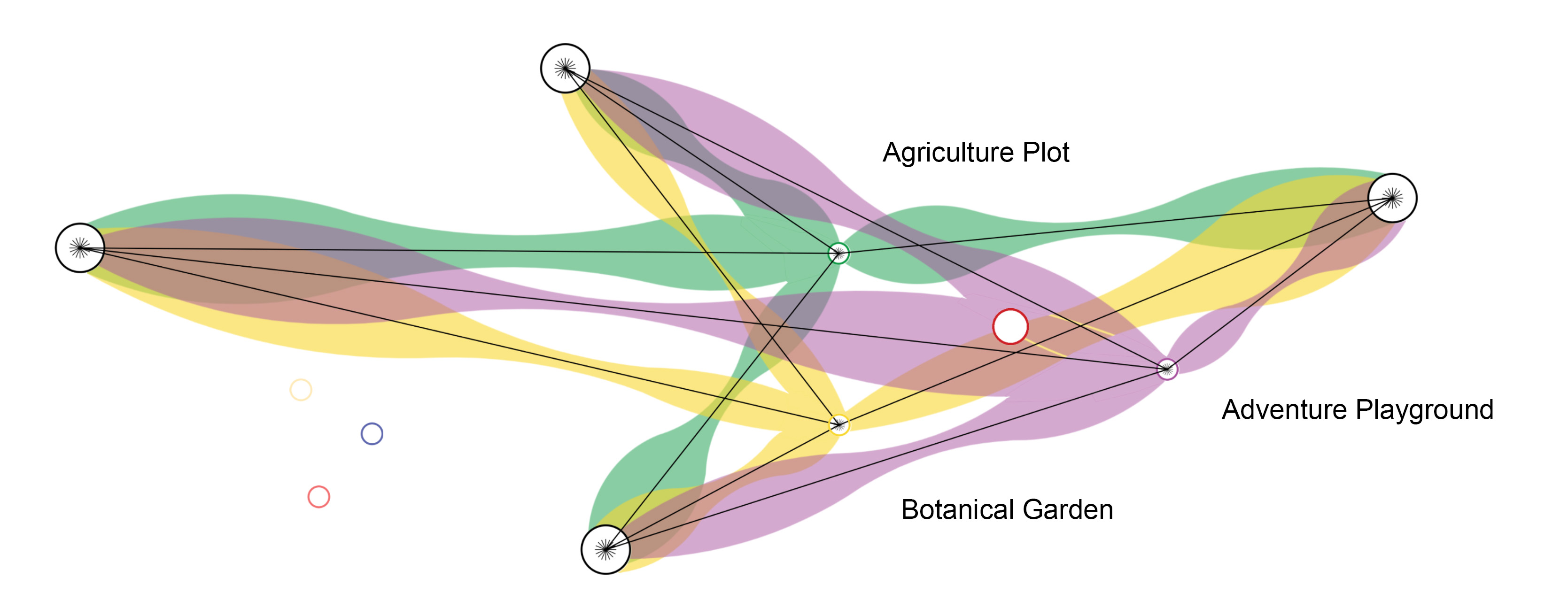
One of the main targets of this project is to demonstrate the flow of knowledge between the schools, the different activities and the whole society. The diagrams below illustrate that education is happening all the time and it is not enclosed between the strict boundaries of a school building but in contrast is a very dynamic and organic shape.
First Frame of Network:
Schools – Activities – Catchment Areas – The Union Canal
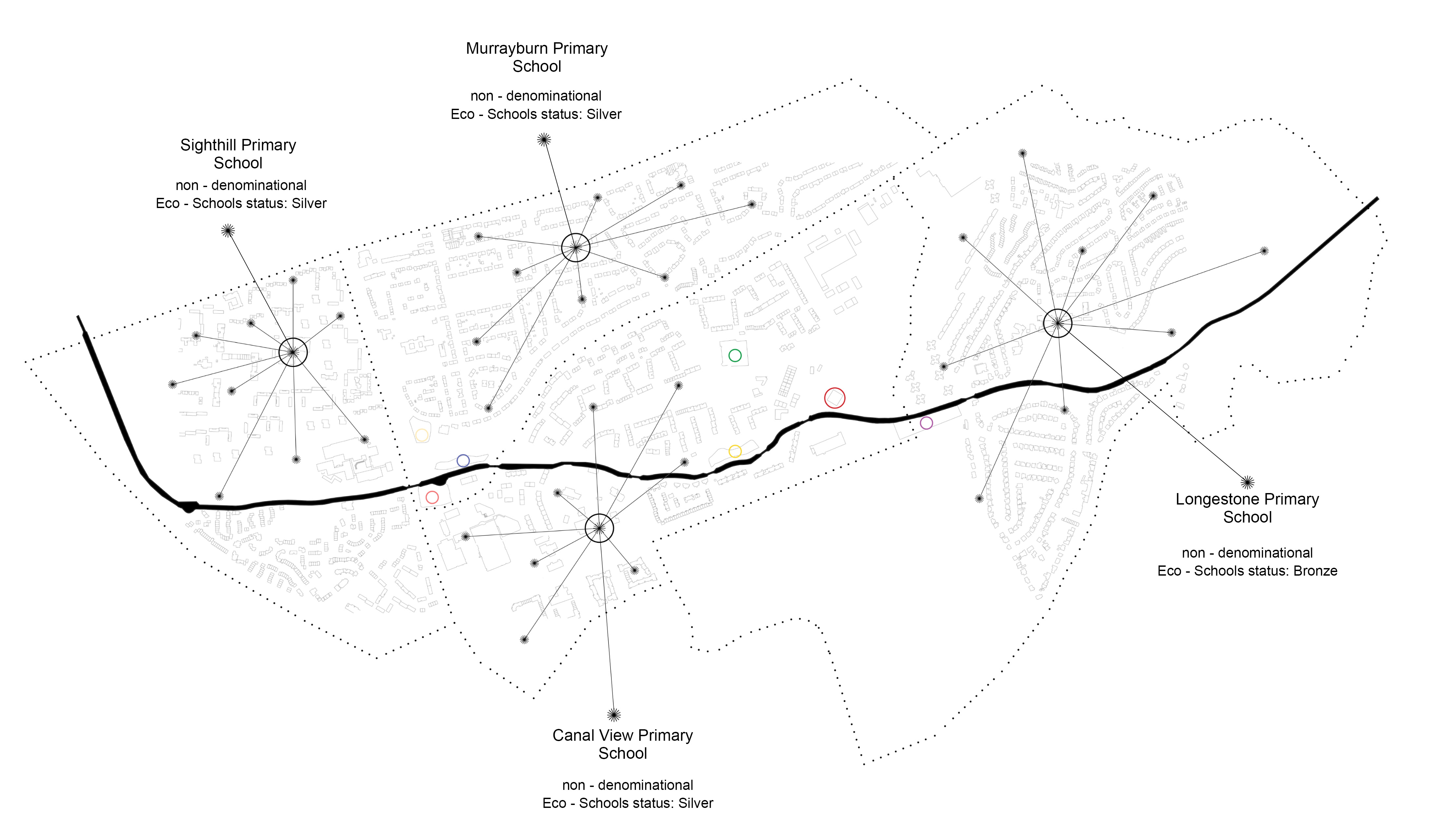
The four schools receive students from different neighborhoods of the city. Each school has a catchment area (dotted line) which serves. Although the physical distance between schools is very small children are divided in different groups, which creates a conceivable barrier to communication.
Second Frame of Network: First Block of Activities
Third Frame of Network: Second Block of Activities
Forth Frame of Network: The “Shelter” Building
Final Frame of Network: Combination of Everything
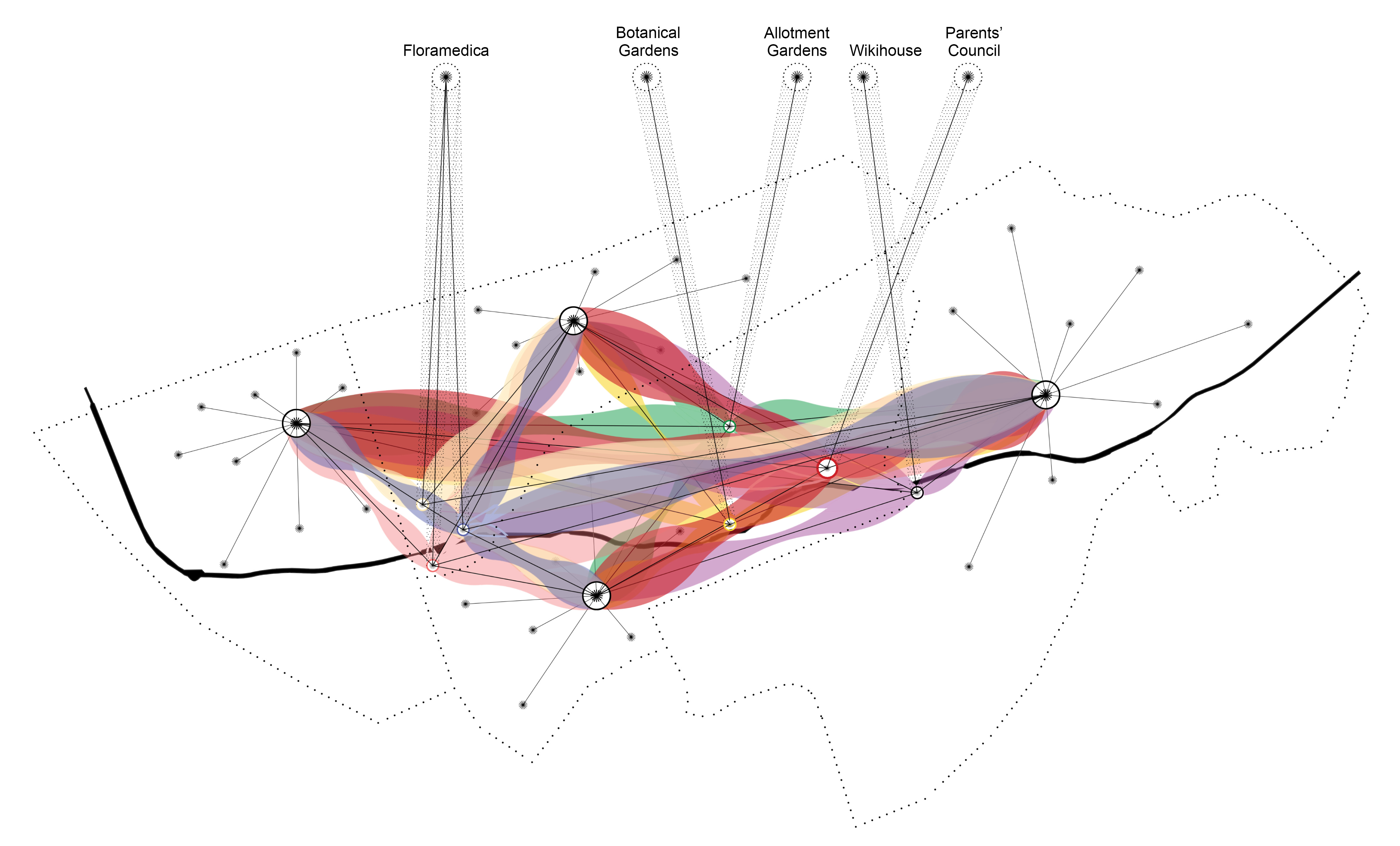
Different groups and communities from the city can feed into this network of knowledge. The shape of it changes during the time, according to the activity taking place and the groups participating in it.
The “Shelter” Building
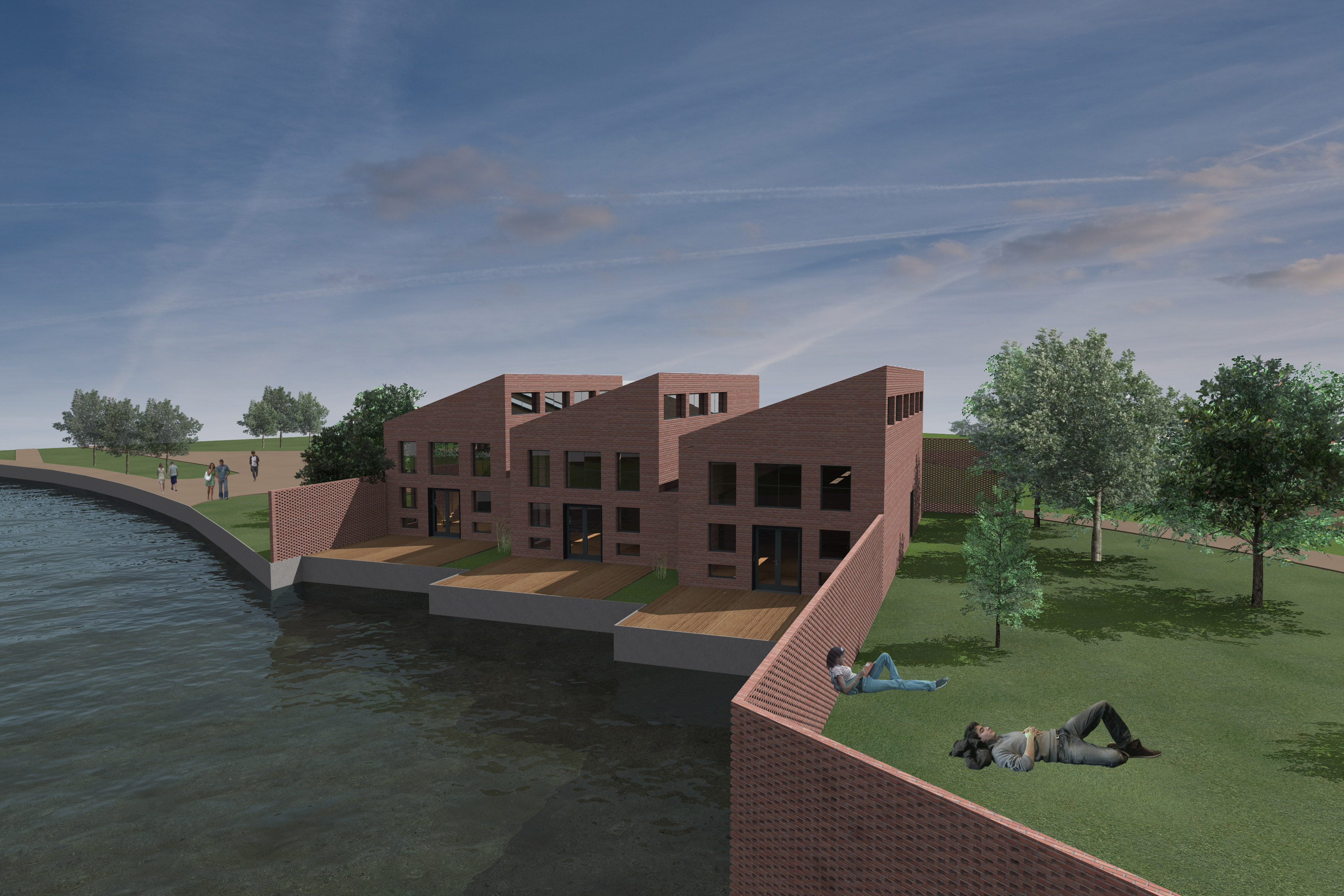
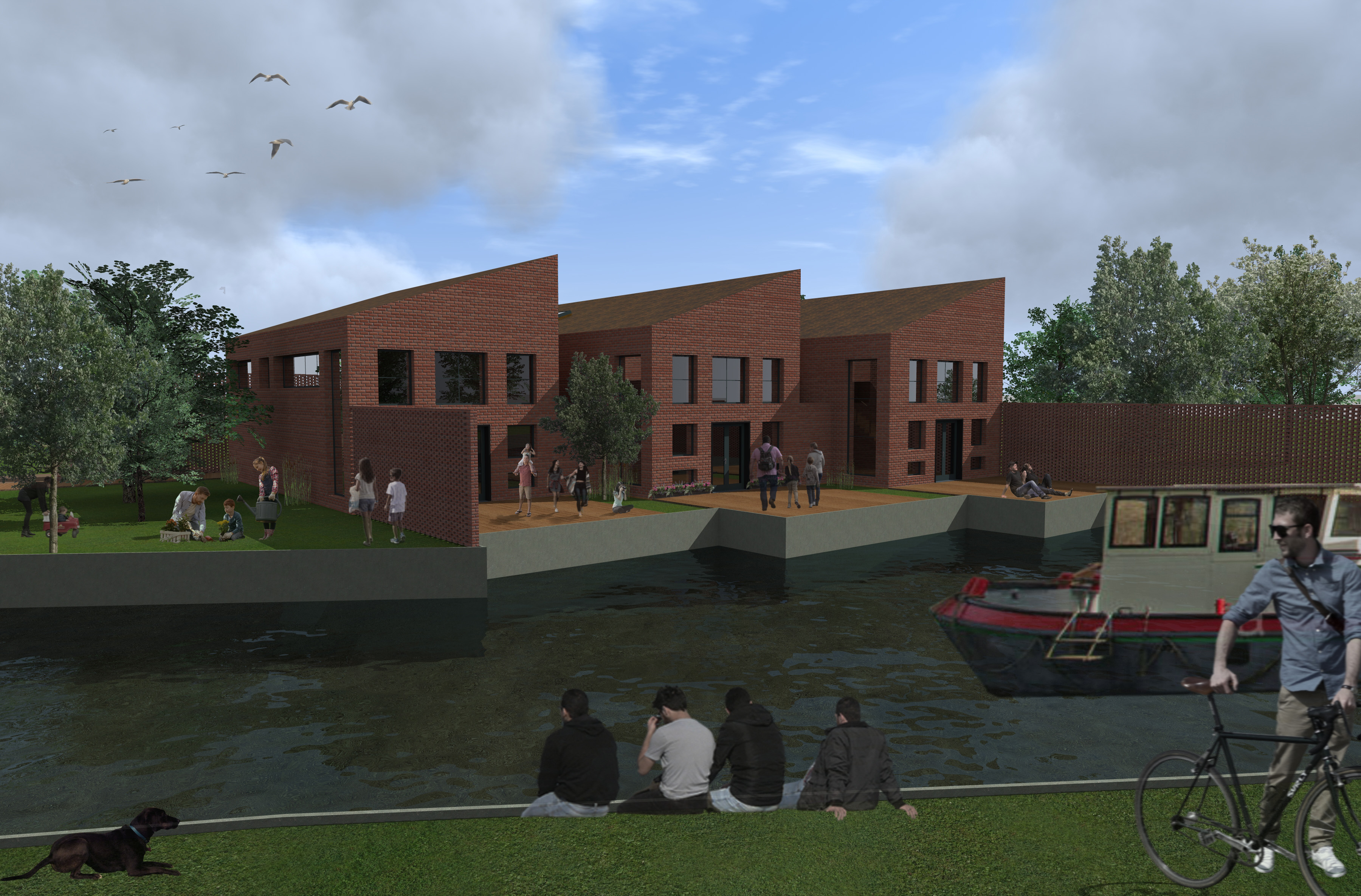
The “Shelter Building”, as it’s called, is located at the corner of Hailes Quarry Park, at the Wester Hailes neighborhood. It is designed to facilitate the need of a space for the schools to run their activities linked with the “eco-schools” programme they are participating to. The total area of the building is 357m² and it consists of three main classrooms, a teacher’s office, wc and storage spaces, as well as an entrance area.
The format of the building evolved taking into consideration some of the environmental characteristics of the space, as well as the location and the function of it. It tries to respond to the climate being as more as environmental friendly and energy sufficient it can. For this reason a compact shape is selected to minimize the energy loses. The three classrooms are facing South-East in order to take advantage of the sun light and heating while at the same time having a view towards the Canal. Moreover, as a strategy has been used the zoning of the spaces, creating filter spaces from the exterior North-West exposed side, to the interior classrooms. This aims to protect the important parts of the building from the cold. The main long brick wall helps to organize the entrance and to create a micro-climate, setting a semi-climatic zone (semi-private corridor). The structure has pitched roofs, in order to catch the North-East light, which is uniform and does not create glare, suitable for educational spaces, and to create upper openings for better circulation of the air. A staggering in the class volumes has been used to let openings in two sides of the rooms also for the better ventilation of the space.

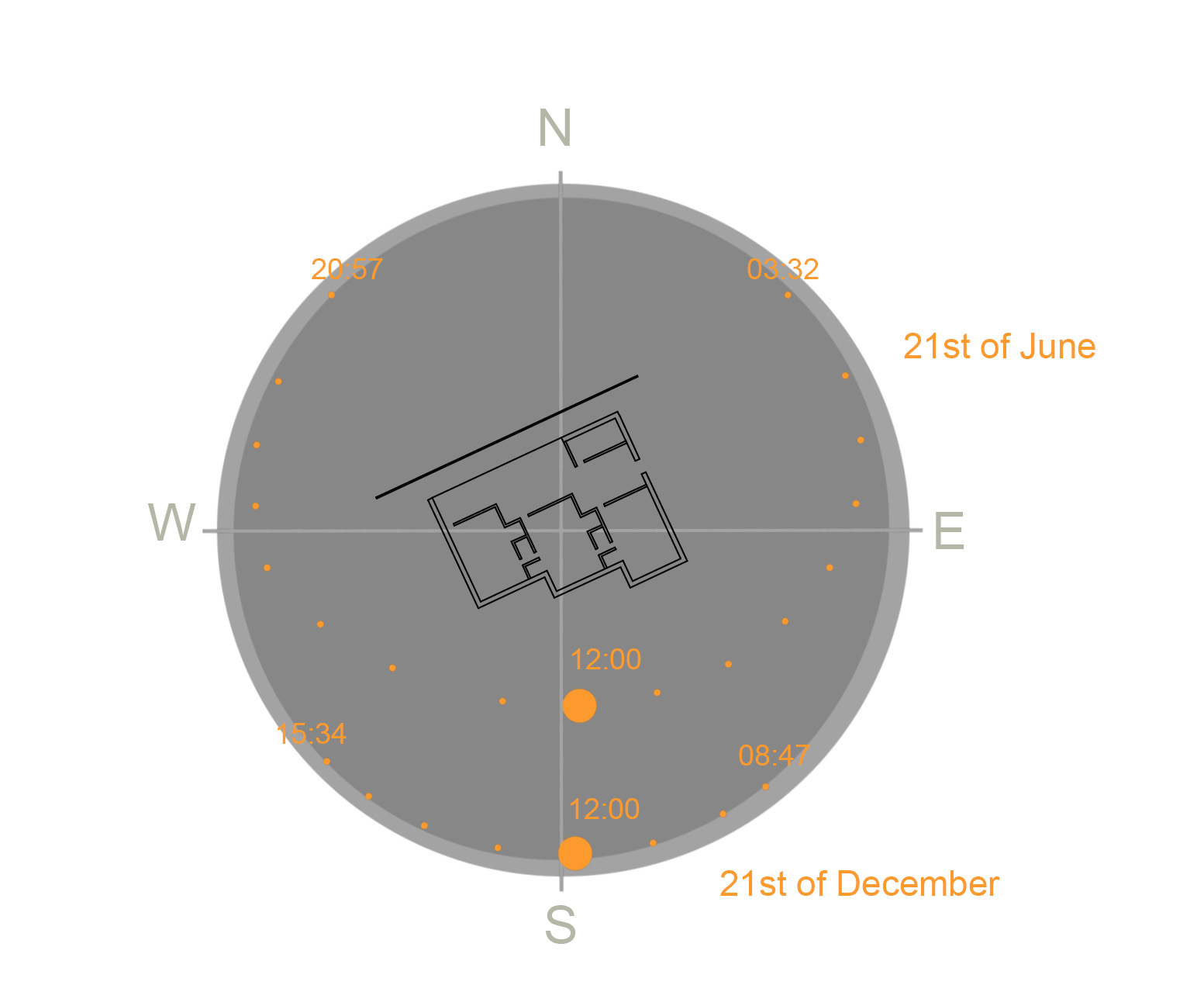
Sun Path 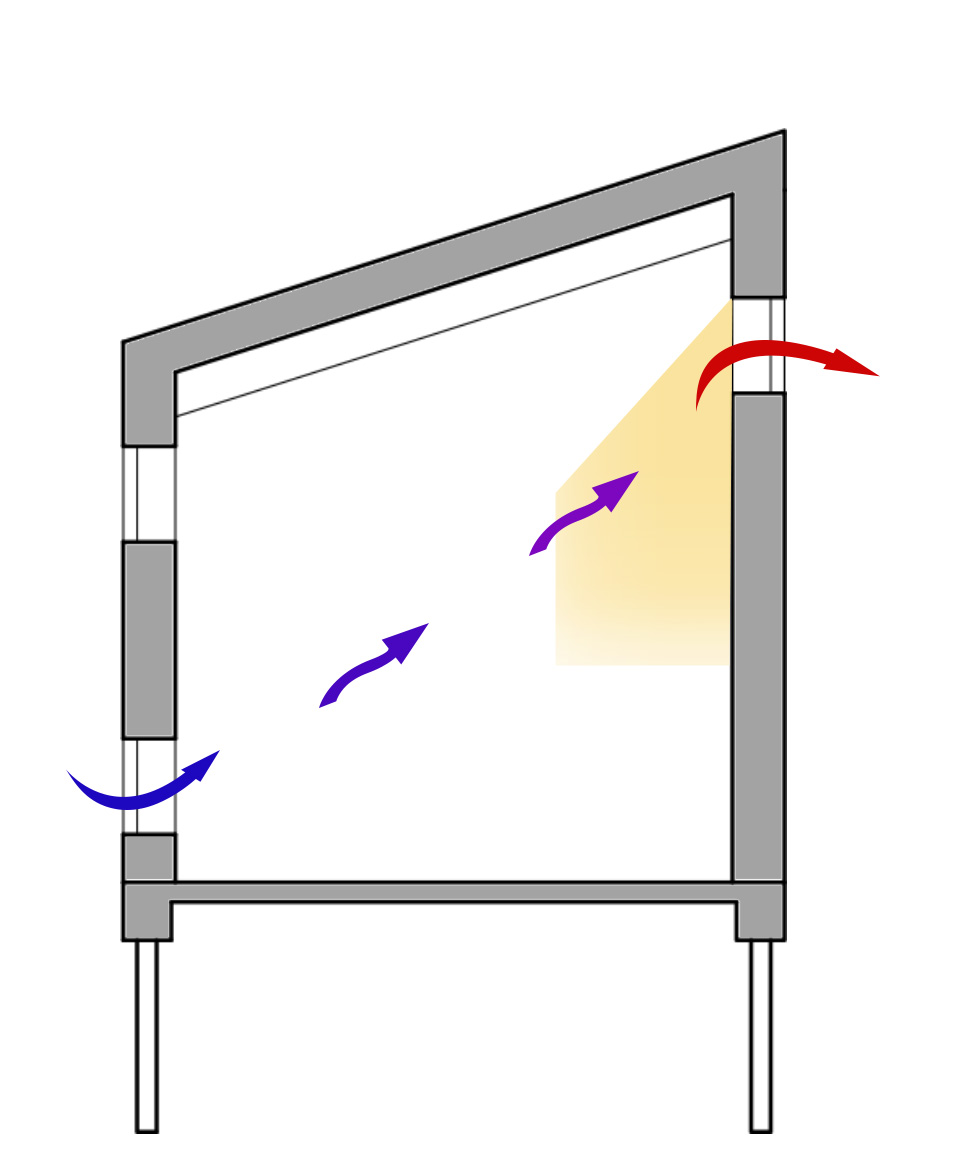
Air Circulation
Locating the Building – Masterplan
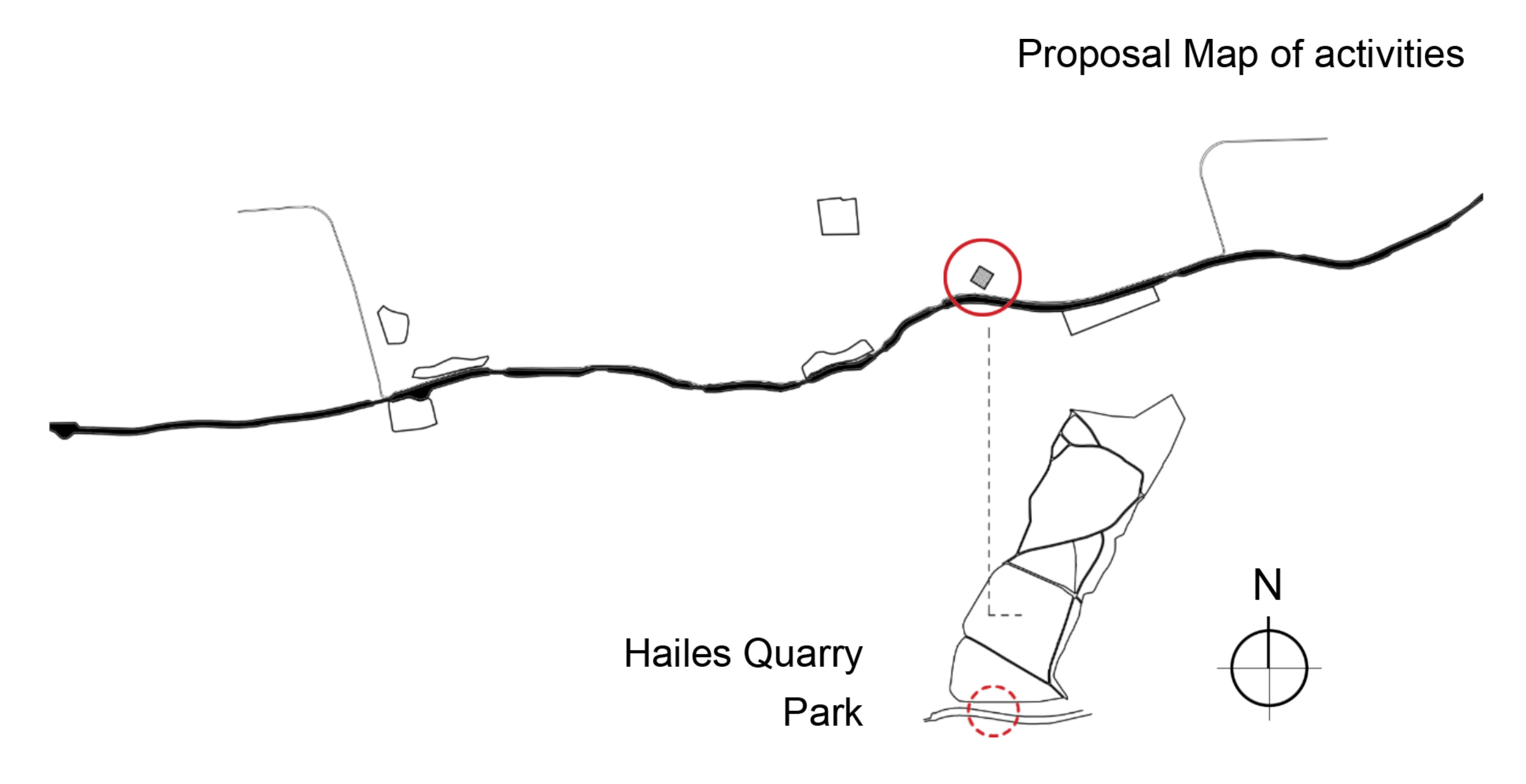
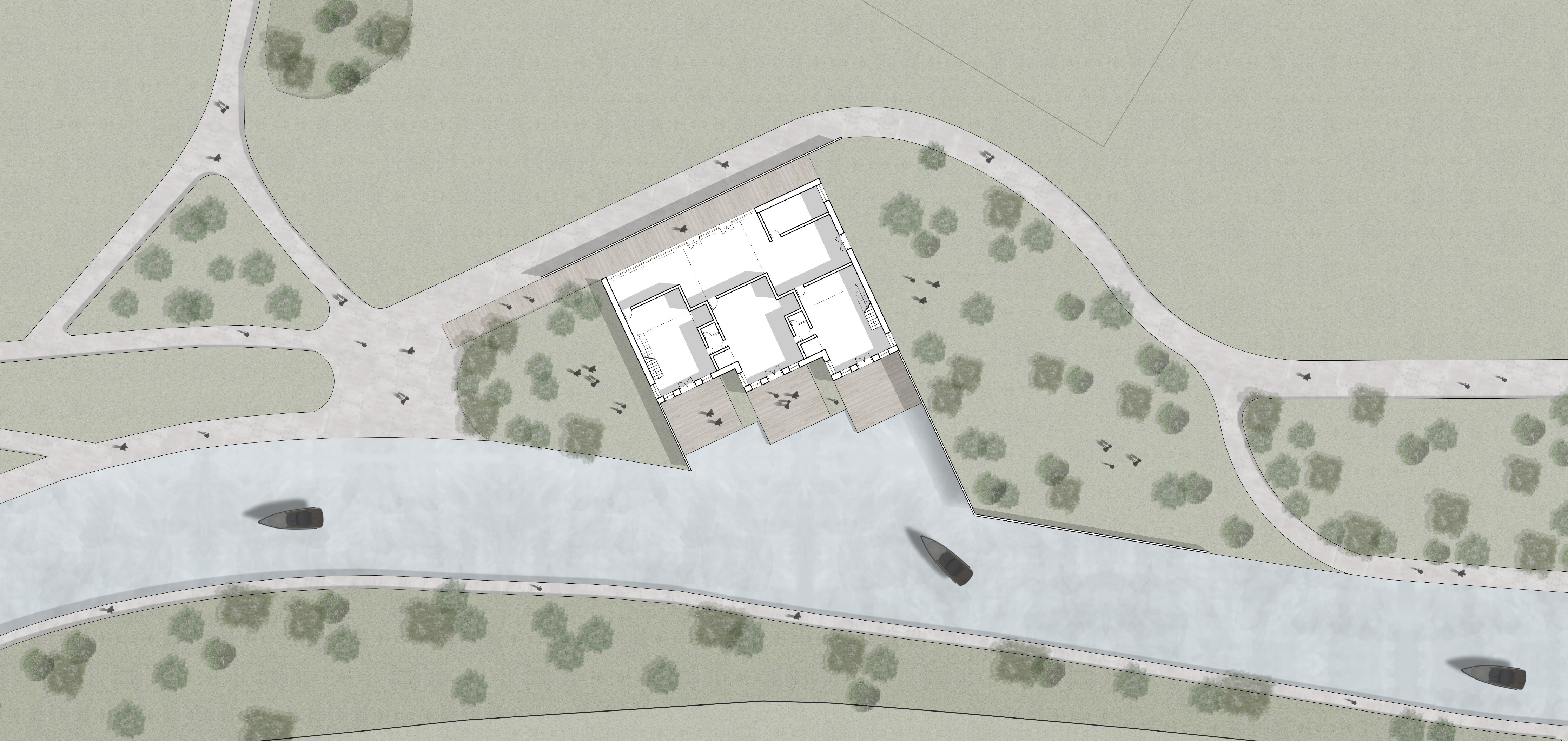
Small transformation to the area of the park were made in order to place the building closer to the Canal and provide a better quality space to everyone. The main change is the bypass of the towpath behind the building, as well as the broadening of the Canal width at the point of the class yards. Moreover, more trees were planted, the Gym area is moved further in the park and the stone wall dividing the towpath from the rest of the city was demolished.
Materials Matter
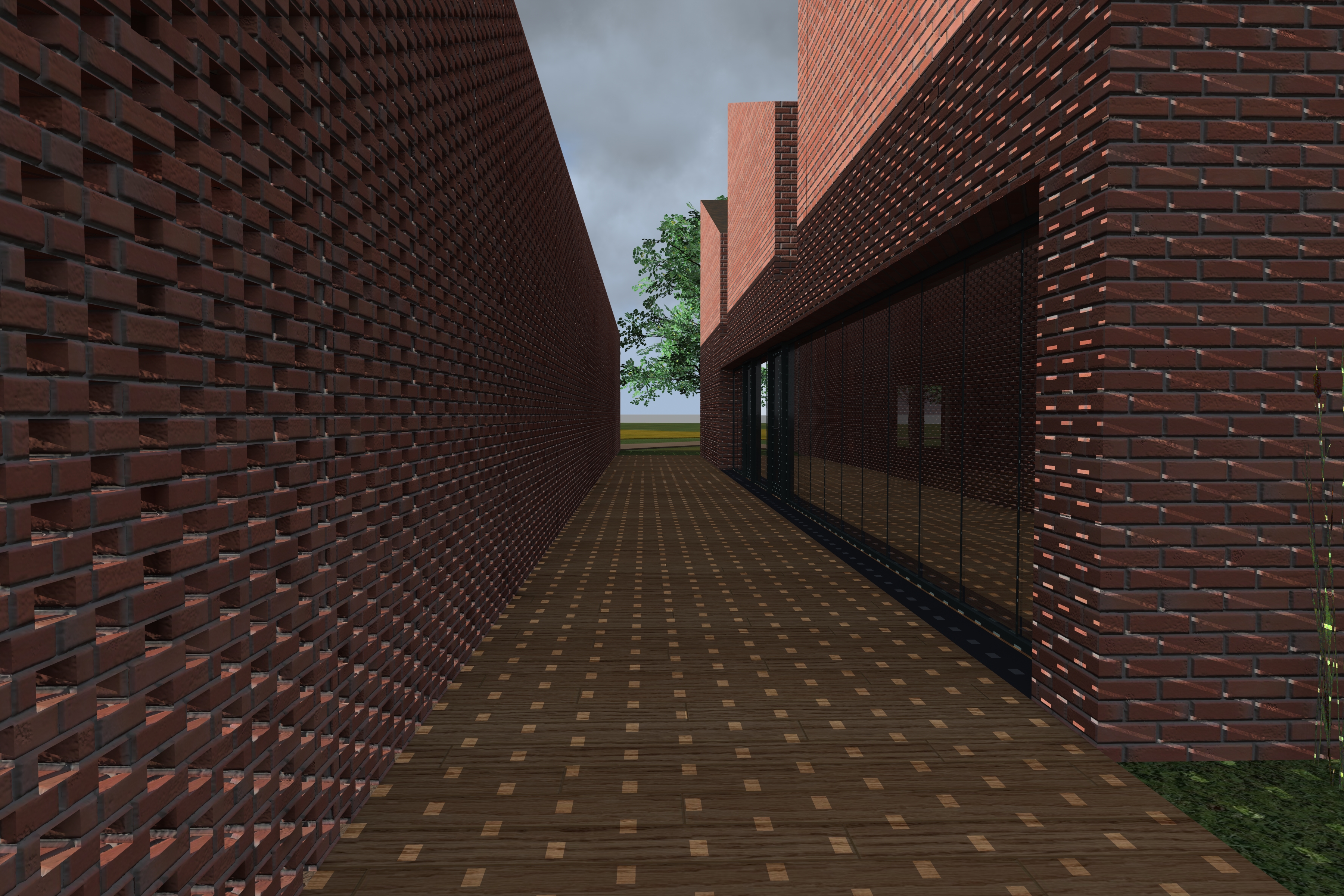
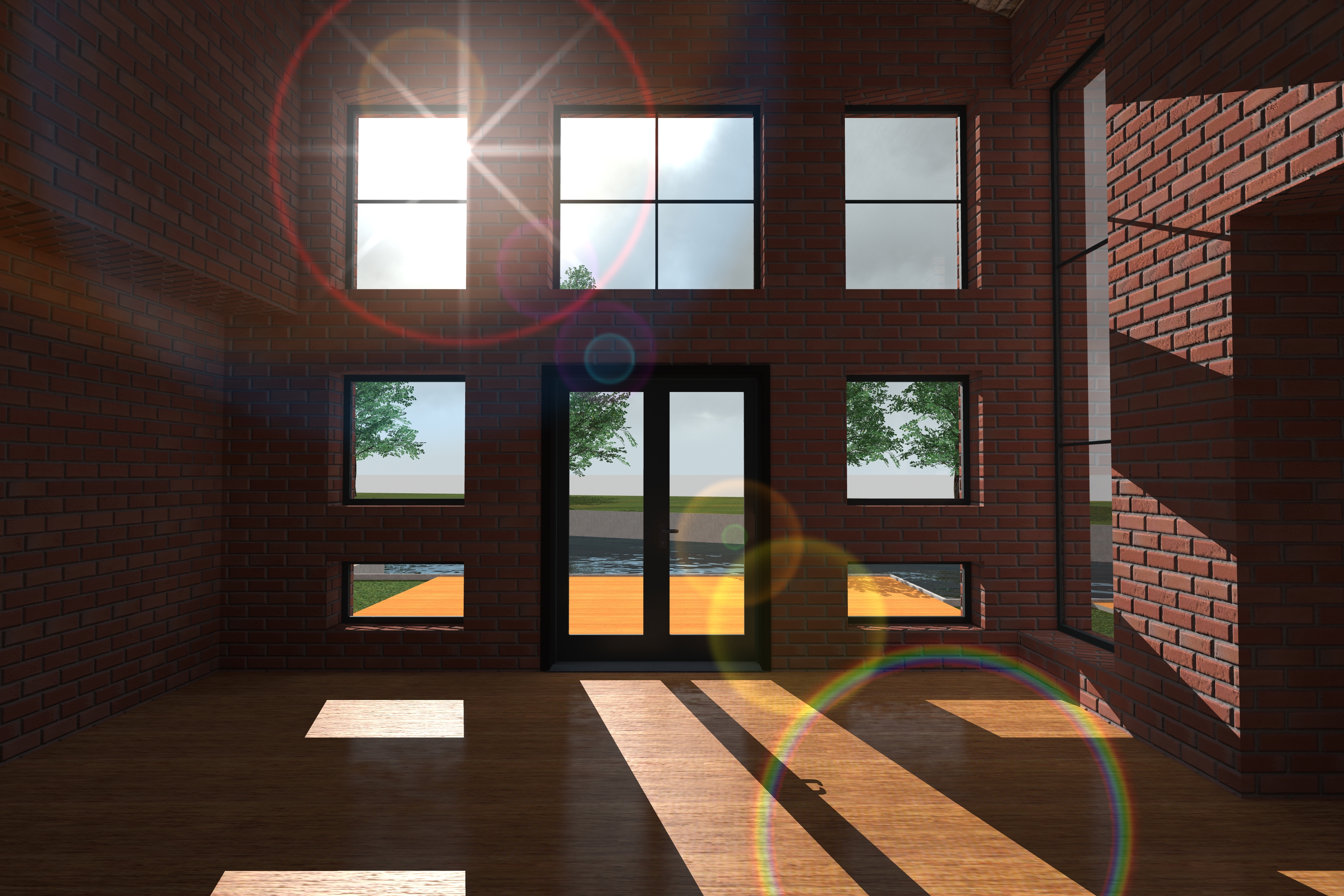
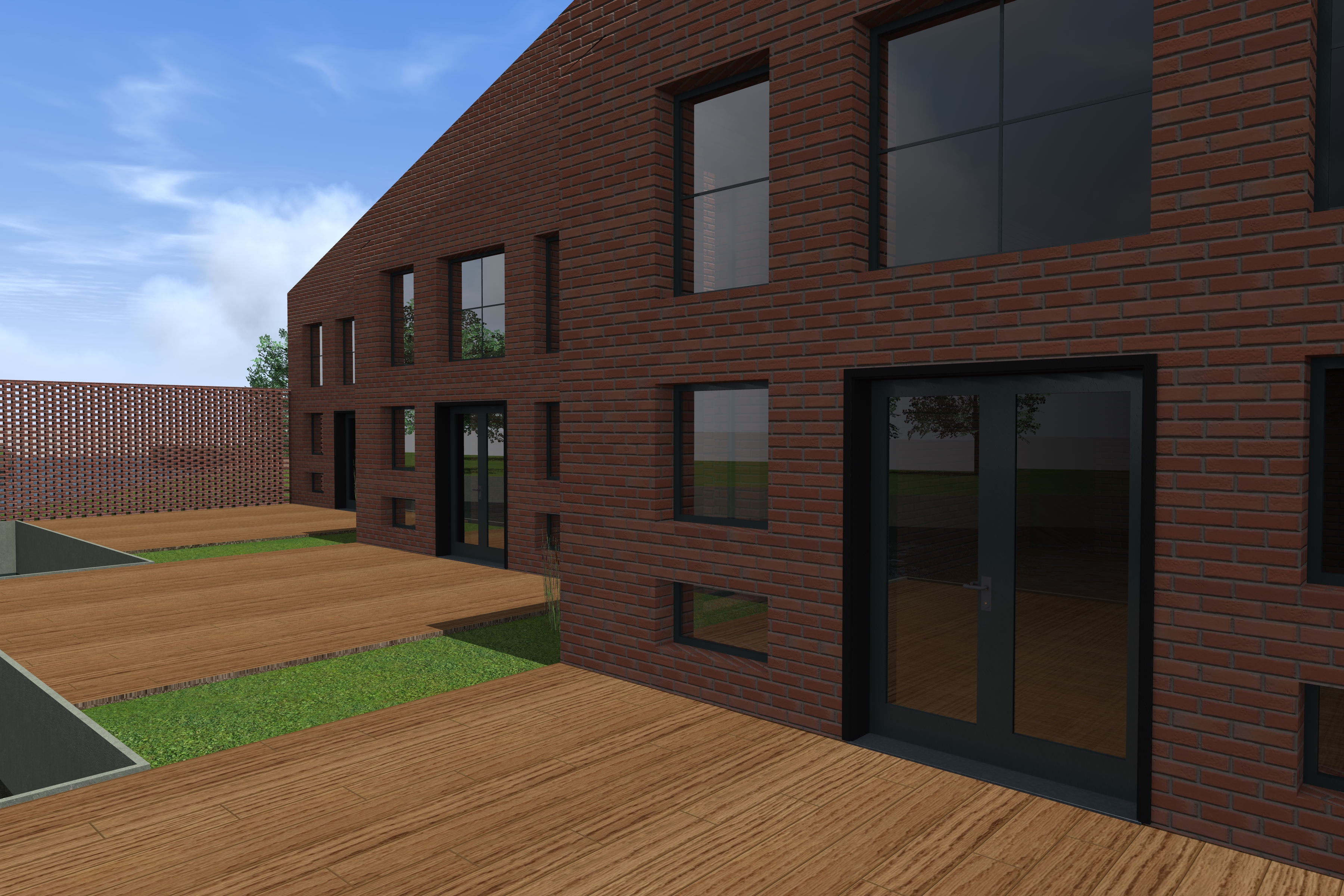
The materials selected for this building are mainly brick, wood, glass and metal for the windows framing. All of them have low embodied energy, are recyclable and create a warm atmosphere to the space. The building tries to achieve a “celebration of materiality and lighting”.
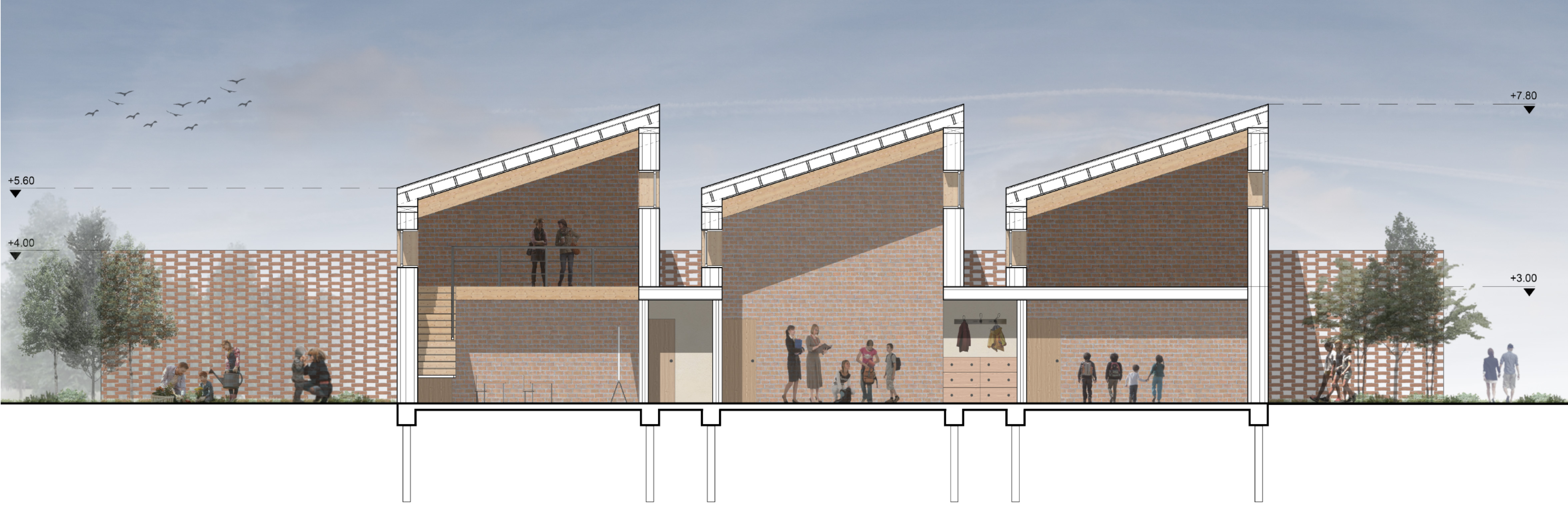
Section of the Building
The structure of the building consists of steel columns and beams based on concrete pile foundations because of the short distance from the water. The external walls are made of exposed brick with insulation in between while the roof is made of glulam beams as main structure with insulation and copper sheets as an external finish.
 WATER LOGIC: REGENERATING UNION CANAL